
Reducing the Strain on the Power Grid

Microgrids Are Proliferating and Some Are Incorporating EV Batteries

Renewables are the fastest-growing form of power generation. Moreover, they are the only source of power keeping pace with the expanding demand for electricity as we adopt electric vehicles (EVs) and all-electric buildings. The disconnect that the experts worry about falls on the grid due to the wild fluctuations between supply and demand. Despite ongoing repairs and upgrades, there has been virtually no grid expansion of capacity over the past decades. Change is coming rapidly, however.

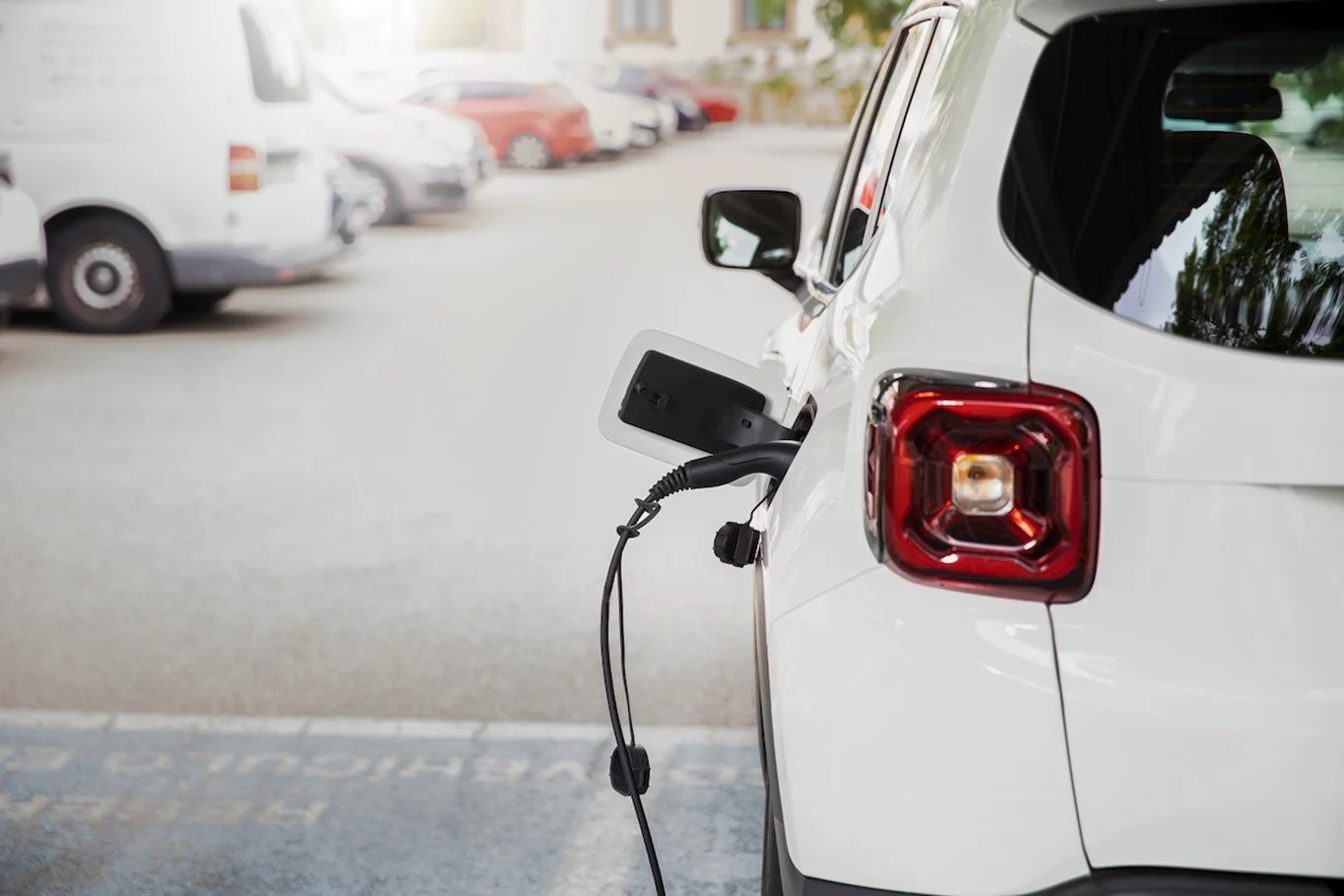
Technology is transforming the large batteries in EVs, trucks, and buses into versatile assets. These components are beginning to store excess renewable electricity and make it available for demand spikes. Millions of EVs can be thought of as a huge energy system that can be connected to another huge energy system, the electrical grid. There has been talk about this for years, but we are now seeing tangible results.

In part because of the war in Ukraine and the resulting boycott of natural gas from Russia, Europe is moving rapidly to create microgrids that combine renewable generation with large battery storage and bidirectional flows for large numbers of EVs. Utrecht in the Netherlands is considered the largest bidirectional city. One of their projects is a parking facility, covered by 2,100 solar panels that provide power to 450 bidirectional charging stations and next-door buildings. The city is planning for 10,000 bidirectional EVs, 10 percent of their total.

There are many advantages to this combination beyond the free parking that bidirectional cars receive when plugged in. By connecting EVs to the grid, utilities need less reserve capacity on hand for peak periods. Utility costs are reduced, and car owners can save up to 50 percent on electric bills. For energy purveyors, the price of electricity changes from minute to minute as supply and demand surge or ebb. Those managing bidirectional systems buy power when solar and wind power are abundant and cheap, store it in electric vehicles, and sell it when demand and prices climb. It’s an old business strategy — buy low, sell high.

Ford, GM, BMW, Mercedes-Benz, and Renault are currently selling EVs with two-way charging software. All EV manufacturers are planning bidirectional cars by 2026. To underline the potency of this approach, California has 70 gigawatts of storage in all the EVs on our roads. In comparison, the total battery storage in all our homes and buildings is only 2-3 gigawatts.

When EV stored power is given back to buildings or the grid, the amount is small and limited by the bidirectional software, or by the decision of the EV owner. Typically, the giveback is equivalent to 10 miles, while keeping enough stored for at least an 80-mile range. However, many EVs giving back, each one only a little, adds up to damping supply and demand swings and big savings to customers and utilities. This approach is also an important tool in countering climate change.

Changing Transportation and Housing Patterns

Addressing Climate Change by Changing Mobility and Housing Biking, small businesses, and social housing are preserving the charm of Paris.

With increasingly bleak reports of atmospheric concentrations of carbon dioxide, are there any places making rapid progress on climate change that can offer hope? Maybe.

Transportation, the second largest source of greenhouse-gas emissions, is becoming electrified. Even better, however, is reducing the use of cars through policies designed to increase walking, biking, and public transportation. In 2021, Paris rolled out a plan to become 100 percent cycle-friendly in five years. This journey was already well underway — car trips in Paris fell by more than 60 percent in the previous two decades, public transit rides increased by 40 percent, and bicycle trips increased by 20 percent. Bicycling in the French capital more than doubled between 2020 and 2024 from 5 percent to 11 percent. Cycling infrastructure, bicycle parking spots, and traffic light changes prioritizing cyclists are mushrooming. Car parking on Paris streets is systematically being eliminated and has shrunk by more than 50 percent.

Another innovation that complements these mobility changes is in housing. Since the start of this century, municipal policies have aggressively been creating social housing to keep middle- and lower-income residents in the heart of the city. One of the goals of this effort is to preserve the ineffable character of Paris — beloved by the French and tourists alike. One-quarter of all Parisians live in public housing, an increase from 13 percent in 2000. The philosophy is that those who produce the riches of the city deserve to live in it. Teachers, sanitation workers, janitors, nurses, university students, bakers, and butchers are all benefiting from this program.

Like cities around the world, Paris is confronting growing homelessness. The initiatives that City Hall has taken to keep low-income citizens from being squeezed out go far beyond what most other cities are doing. Whether Paris will achieve an equitable, diverse city remains to be seen. The challenges are formidable, but the goal is to have 30 percent public housing for low-income residents and 10 percent for middle-income inhabitants by 2035. Paris is already a dense city, but it can use its legal authority to preempt the private sale of a building and convert it into public housing. The city has also sharply restricted short-term rentals, while transforming old train rights-of-way and condemned buildings into social housing. Over the past 25 years, the city has built or renovated 82,000 apartments for families and added 14,000 student units. Rents can be as little as $650 per month for apartments.

Housing is only part of the equation for achieving a balanced city; the other part is creating a healthy mix of small businesses: boulangeries, cheese shops, bicycle repair places, corner delis, flower stalls, and artisan workshops. The city can favor these types of small businesses because it is the landlord of 19 percent of city shops. It limits the number of chain businesses in preference for small operations, thus creating continuity and an enhanced sense of timelessness.

Moving Biking from Minority to Majority Status

Slowing Cars on Most Urban Streets to Lower than 18 mph Opens Cycling to All Ages

Santa Barbara has been investing heavily in growing and improving its bicycle infrastructure, as have many other cities in this country. These investments lead to a growth in cycling but seem to plateau at around 8 percent. In Europe, however, there are many cities where cycling reaches 80-90 percent of the population. What accounts for the huge disparity?

The difference seems to be safety. In the Netherlands, for instance, bike and pedestrian safety is addressed holistically and uncompromisingly. Dutch road engineers continuously seek to remove “conflict points and zones” for riders, which mostly occur at intersections, transition sections, or stretches of roads where bikes are competing for space with other modes of transportation. In California, bike-lane engineering standards provide high-level safety between conflict points but not at intersections where conflict danger is greatest. We still prioritize speed and comfort for car drivers over the people that live, work, walk, and bike on our streets.

What does safe infrastructure look like? The Dutch have a lot of bike lanes that are separated and protected from cars with highly engineered intersections that almost eliminate interaction (conflict) between drivers and cyclists. Wherever the two have the possibility of interacting, the speed limits are below 20 miles per hour (mph) with cameras for enforcement. The Dutch know that slow cars are safer; fast cars are never safe. Eighty percent of all urban streets in Holland are posted at 18 mph or less, a speed at which collisions can cause serious but survivable injuries.

Another critical safety factor is that most drivers are also cyclists with children (this is the case whenever cycling gets near 80 percent), so they are extremely careful and attentive of cyclists. In most northern European cities where bike riders are ubiquitous, urban streets are intentionally narrow, designed with frequent speed bumps, and have many stop signs. When collisions do occur, the default assumption is that the larger mode is at fault, which is not the case in the U.S. 

Uncompromisingly safe infrastructure for cyclists leads to the quantum leap from around 8 percent to 80 percent. Many benefits accompany this growth: improvements in air quality and public health, plus significant offsets to climate change. It also moves a community toward 15-minute neighborhoods.

People love to ride bikes: It is invigorating, relaxing, efficient, and convenient. It fulfills our need for daily exercise, keeps us limber, and it’s free. It is a truly equitable form of transportation, available to rich and poor alike. Seniors can bike years after they give up driving. Kids who bike tend to be among the happiest young people. Even people with disabilities can use adaptive bicycles.

Santa Barbara needs to learn from European cities that have mastered the leap to 80 percent bike riders. It seems a perfect fit for our benign climate.

The Impact of Roads on Nature

The science of road ecology studies the influence of roads on nature. Their findings to date indicate that roads, even unpaved ones, impact the earth in every way and at every scale. But perhaps the most vexing is noise pollution, even more than roadkill, particulate pollution, and constraints on gene pools. Noise bleeds into its surroundings. Eighty percent of the United States lies within a kilometer of a road, a distance at which vehicles project 40 decibels. As traffic swelled in the 20th century, road noise became a public-health issue, depriving us of sleep, impairing our cognition, and producing the stress hormones that lead to high blood pressure.

Most people treat the words “sound” and “noise” synonymously, but they are antonyms to acousticians. Sounds are fundamentally natural and often barely perceptible. Noise, by contrast, is a human-produced pollutant. It is unpleasant. People with good hearing register sounds as low as 10 decibels. Most animals can detect sounds at negative-20 decibels. For most of them, vision is a luxury, but hearing a necessity for survival in the wild. For this reason, most wild creatures try to get as far away from roads as they can, which confounds their migration routes and their propensity to diversify their gene mix.

Ben Goldfarb, in his book Crossings, described research that was done a decade ago on a raised green mesa in central Idaho. This area was a major refueling stop for throngs of southbound migrating songbirds, probably selected in part because there were no roads nearby. The researchers wanted to observe how these travelers would respond to amplifiers placed in the area broadcasting traffic noise from dawn to dusk. On days when the recording was played, bird counts plummeted, some species avoiding the area altogether. They found those who did stop were skinnier because they had to devote more time scanning the skies for hawks, rather than eating berries and beetles while being alerted to danger by the alarm chirps of chipmunks or martens. For the first time, this research verified that noise alone could impinge on animals’ survival.

Some national forests’ rangers and administrators are starting to push for the removal of forest service roads, concluding that the best way to create quiet habitat for wildlife is to not have roads through wilderness areas.

As Goldfarb put it at the end of his book, we need “a solar panel on every roof, a wetland on every floodplain, a wildlife crossing at every migration corridor” to reverse our devastating impact on the natural world and become a more benign presence. He continues, “And our investment in crossings must be matched by our commitment to habitat preservation: an overpass whose surroundings get developed into strip malls and condos is just an expensive bridge to nowhere.”

Congress’s recent infrastructure bill allocates $350 million for wildlife crossings and road-ecology interventions, the largest investment ever in road removal and animal-friendly infrastructure.