
Communities

California’s EV Charging Milestone

Federal Resistance to the EV Shift Complicates National Climate Progress

The Trump administration has aggressively reversed U.S. climate policy, focusing on fossil-fuel expansion, withdrawing again from the Paris Agreement, and suspending wind and solar renewable energy projects by revoking federal permits. It is rolling back stringent fuel economy standards and boosting manufacturers’ profitability for high-margin gas-powered SUVs and trucks while slowing the shift toward electric vehicles (EVs). The U.S. is now producing more oil and natural gas than Saudi Arabia and Russia combined. The federal government has also ended the pause on liquified natural gas (LNG) exports. These policy reversals are out of step with the rest of the world. 

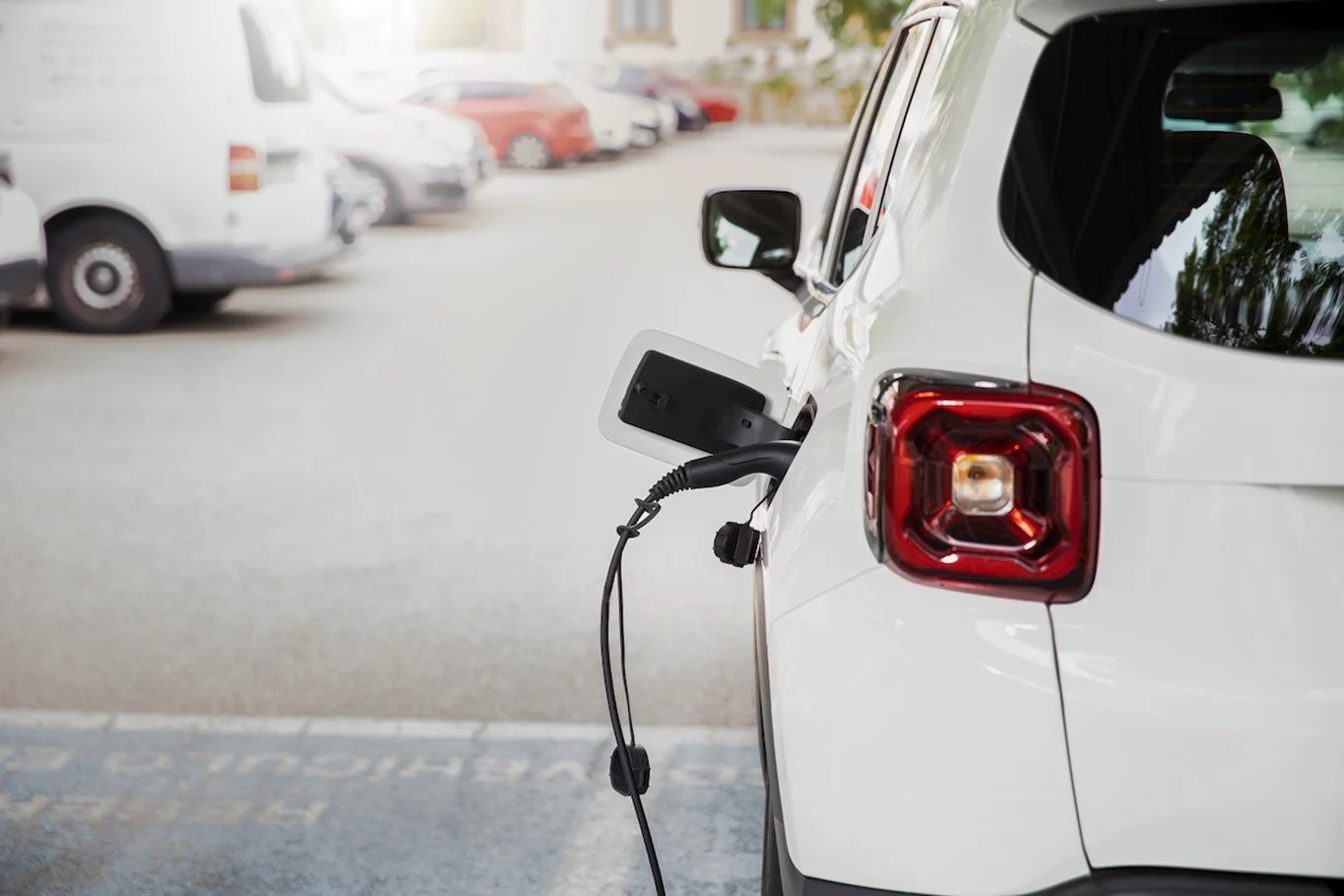
California, however, is still forging ahead in its transition to electric mobility. By 2024, the Golden State had 178,500 publicly accessible EV charging stations, double the number from two years before. For comparison, this number is significantly greater than our state’s 120,000 gas nozzles. California is a leader, in the U.S. and globally, in shifting to sustainable transportation.

According to California Energy Commission’s data, most of the state’s chargers are Level 2, while only 17,000 are fast chargers. Most hybrid vehicles cannot use fast chargers, a factor that influences the higher demand for Level 2 ports. Home installations of EV ports have also been increasing with more than 700,000 Level 2 chargers now in place. This investment complements the state’s public EV infrastructure network.

Although the withdrawal of federal dollars is slowing the transition to clean, electric transportation and increasing greenhouse-gas emissions across the country, California remains committed to substantial investments in EVs. Much of this investment is designated for underserved communities across the state to ensure that EVs become accessible to a broader segment of the population, especially in lower-income areas. California has not wavered on its goal to ban the sale of new gasoline-powered vehicles by 2035. 

Perhaps California’s next innovation into clean energy will be to encourage the installation of solar photovoltaic arrays over parking lots linked to EV charging ports. Bidirectional charging software now allows drivers to help utilities even out their demand curve by offering (for compensation, of course) a small percentage of their EV’s stored electricity. This produces win-win savings: for the utility, the driver/homeowner, and the community. These smart systems are becoming prevalent in Germany, the Netherlands, and elsewhere in Europe. France has recently mandated that all large parking lots be covered by solar panels.

California’s reaching the milestone of more EV charging stations than traditional gas stations, reminds us of the potential for a greener future, even as federal policymakers and some industries push in the other direction.

Headway in Curbing Packaging Waste

Europe is Moving to Reshape Its Packaging Culture

Plastics have brought convenience and benefit to our lives but also pollution, toxicity, and environmental degradation. Globally, almost 500 million tons of plastic are produced each year, 90 percent of which ends up contaminating our planet. Alarmingly, plastic production is forecast to soar and could triple by 2040.

The framework for a global plastics treaty was adopted by 175 countries in 2022 with final negotiations to happen later this year, followed by implementation starting early next year. Despite being a giant step forward, much remains to be done to reverse our plastic polluting ways.

Perhaps the most encouraging are the sweeping measures that the EU (European Union) has just enacted to address packaging waste. The regulations aim to reduce environmental damage and promote sustainable practices. The PPWR (Packaging and Packaging Waste Regulation) sets binding targets on throw-away plastics. On average, every person in the EU generates 418 pounds of packaging trash each year, and this figure is growing.

For the first time, the EU has created goals to combat the growing problem of waste by reducing packaging regardless of the material involved. Packaging must be 5 percent less by 2030, 10 percent by 2035, and 15 percent by 2040. The PPWR’s fundamental goal is to reshape packaging habits everywhere in the EU. The protocol requires that almost all packaging material be recyclable by 2030. Plastic packaging is especially singled out with minimum recycled content standards. Takeout restaurants must provide reuseable containers. Single-use plastic bags, straws, utensils, etc. will be banned by 2030. Similarly for miniature packaging of toiletry products, ubiquitous in the hospitality industry. Plastic and metal beverage containers will be collected separately via deposit-return programs.

These EU rules cover the full life cycle of packaging, including the manufacture, composition, and reusable or recoverable nature of materials. The requirements are designed to foster innovation. One example being researched in Singapore is to duplicate the gut flora of a super worm (Zophobas atratus) that degrades plastics. Using the microbes found in the worm’s gut in varying combinations, scientists have been able to efficiently break down the most prevalent types of plastics in a scalable and replicable manner.

While challenges remain, adoption of the PPWR is a big leap forward in the fight against plastic pollution and waste proliferation. Being the biggest producer of packaging waste, the U.S. needs to follow suit. As an added benefit, all these rules, requirements, and measures provide a big boost to creating a circular economy.

Oceans Are a Great Source of Food for the Planet

Sustainable Aquaculture Practices Need to Expand Worldwide

Concerns about human and planetary health have led many to prefer locally produced, organic foods. Despite no pesticides or chemicals, the organic label tells nothing about the nutritive content of food. Only healthy soils such as those restored on regenerative farms can produce foods rich in vitamins, proteins, minerals, and enzymes. Local sourcing means fewer carbon emissions and improved freshness.

Because we have depleted our soil over many centuries, but especially in the past 70 years, the fish, plants, and algae we harvest from our oceans are more packed, in general, with protein and micro-nutrients than terrestrial foods. Seafood is an important and growing source of protein for humans around the world. Data from 2020 indicates that more than half the food harvested from the oceans is from aquaculture, namely, fish farms.

After a rocky beginning, large-scale fish farming has become a truly sustainable method of producing seafood. Some categories of aquaculture are inherently sustainable — mussels, clams, and oysters filter pollutants out of water and create habitat for other sea creatures. Seaweed farms are another — they sequester carbon, offsetting greenhouse-gas emissions, and extract nutrients from fertilizer runoff from land, thereby helping reduce algae blooms.

Some farmed species — such as salmon, tilapia, and shrimp — had many negative environmental impacts in the early years of farming but have undergone a transformation due to technological innovations and new practices. Waste has been significantly reduced: AI camera systems track fish movement in their pens to deliver just the right amount of food at the right time. Bioremediation, another improvement, employs filters that provide surfaces for beneficial bacteria and micro-algae to clean up pollutants in the water. These and other management practices, now incorporated into U.S. regulations, have made a big difference. Unfortunately, they are not implemented in many other countries. Since the U.S. still imports around 70 percent of the seafood consumed here, a serious issue remains as to how to get other countries to improve the sustainability of their aquaculture.

California became the first state to set up a statewide network of marine protected areas (MPAs), the largest component of which is in the Santa Barbara Channel. Our local MPAs protect numerous endangered species, sensitive habitats, kelp forests, and deep-sea coral gardens. The success of these zones has been dramatic, essentially dispelling the initial opposition from local fishermen. Species have rebounded, spilling beyond the reserve boundaries, and greatly increasing the catches of fishermen. Because of our healthy and sustainably managed Channel, buying local seafood makes sense, just like consuming local, organic fruits and produce.

“Our planet is 70 percent ocean” says Kim Selkoe, CEO of the local Get Hooked seafood company. “If we fish sustainably and harvest sustainably, we can meet the protein needs of large numbers of people.”

Reducing the Strain on the Power Grid

Microgrids Are Proliferating and Some Are Incorporating EV Batteries

Renewables are the fastest-growing form of power generation. Moreover, they are the only source of power keeping pace with the expanding demand for electricity as we adopt electric vehicles (EVs) and all-electric buildings. The disconnect that the experts worry about falls on the grid due to the wild fluctuations between supply and demand. Despite ongoing repairs and upgrades, there has been virtually no grid expansion of capacity over the past decades. Change is coming rapidly, however.

Technology is transforming the large batteries in EVs, trucks, and buses into versatile assets. These components are beginning to store excess renewable electricity and make it available for demand spikes. Millions of EVs can be thought of as a huge energy system that can be connected to another huge energy system, the electrical grid. There has been talk about this for years, but we are now seeing tangible results.

In part because of the war in Ukraine and the resulting boycott of natural gas from Russia, Europe is moving rapidly to create microgrids that combine renewable generation with large battery storage and bidirectional flows for large numbers of EVs. Utrecht in the Netherlands is considered the largest bidirectional city. One of their projects is a parking facility, covered by 2,100 solar panels that provide power to 450 bidirectional charging stations and next-door buildings. The city is planning for 10,000 bidirectional EVs, 10 percent of their total.

There are many advantages to this combination beyond the free parking that bidirectional cars receive when plugged in. By connecting EVs to the grid, utilities need less reserve capacity on hand for peak periods. Utility costs are reduced, and car owners can save up to 50 percent on electric bills. For energy purveyors, the price of electricity changes from minute to minute as supply and demand surge or ebb. Those managing bidirectional systems buy power when solar and wind power are abundant and cheap, store it in electric vehicles, and sell it when demand and prices climb. It’s an old business strategy — buy low, sell high.

Ford, GM, BMW, Mercedes-Benz, and Renault are currently selling EVs with two-way charging software. All EV manufacturers are planning bidirectional cars by 2026. To underline the potency of this approach, California has 70 gigawatts of storage in all the EVs on our roads. In comparison, the total battery storage in all our homes and buildings is only 2-3 gigawatts.

When EV stored power is given back to buildings or the grid, the amount is small and limited by the bidirectional software, or by the decision of the EV owner. Typically, the giveback is equivalent to 10 miles, while keeping enough stored for at least an 80-mile range. However, many EVs giving back, each one only a little, adds up to damping supply and demand swings and big savings to customers and utilities. This approach is also an important tool in countering climate change.