
Energy & Water Efficiencies

New Sustainable Building Products

New, Green Products Can Save Energy and Increase Comfort

With the backsliding of the current federal government, state governments, local jurisdictions, and private businesses need to do more to forge ahead in addressing climate change. The building industry is a big contributor to greenhouse-gas emissions (GHG). It is also conservative and slow to change. Many construction innovations and new building products, however, are in either the research, prototype, or early adoption phase. A few examples are:

  • Pre-cast “self-cooling” concrete walls incorporate scalloped or deeply fluted exterior surfaces. A car radiator is similar — lots of surface area for wind to pass over and remove heat. A building project in Houston combined these grooved walls with reflective white paint, which also repels dirt. Vertical fin walls were added to the exterior as well as shade-giving plants on the sunny side. Monitoring showed interior temperatures 18 degrees Fahrenheit cooler than in nearby buildings with standard flat walls. The result: less cleaning, lower maintenance, reduced energy bills, and greater comfort for residents, with only a slight increase in construction costs. Society gets fewer GHG emissions and electrical grid pressure relief.

  • A transparent window coating uses applied quantum physics to outperform conventional heat-reducing coatings. Multiple refractive indices inside stacked ultrathin layers collectively transmit or reflect light based on wavelength. The application is like polarized sunglasses, but unlike sunglasses, the coating remains clear and effective no matter the angle of incoming light. During heat waves, 87 percent of heat gain in our houses is through windows. This new coating blocks heat-producing ultraviolet light and infrared rays but not visible light. Tests of this wide-angle spectral filter coating yielded temperatures 13 degrees Fahrenheit lower than conventional glass. This coating can also be applied to car windshields and sunroofs. Comfort is improved with less energy demand.

  • EcoSmart gypsum wallboard (GWB) uses 25 percent less water to fabricate, produces 20 percent less CO2 emissions, weighs 20 percent less, and saves 20 percent of fuel during transportation. EcoSmart 5/8-inch Type X board has a slight increase in cost — 7 percent — but has already captured about 35 percent of market share. It is considered cost competitive because installers love the reduced weight. Concerns about acoustic and fire-resistant properties, both of which depend on density, turn out to be unfounded. Tests show performance equal to standard 5/8-inch GWB.

To avoid big temperature swings, buildings incorporating passive solar design strategies rely on material with high thermal mass. Concrete is one such widely used material. A double layer of 5/8-inch GWB performs equally well, is less expensive, and a better choice for multi-storied structures harnessing natural heating and cooling technologies.

Speeding up our adoption of these and other innovations in sustainable building materials could greatly reduce carbon emissions not just in the building sector but overall. 

Oceans Are a Great Source of Food for the Planet

Sustainable Aquaculture Practices Need to Expand Worldwide

Concerns about human and planetary health have led many to prefer locally produced, organic foods. Despite no pesticides or chemicals, the organic label tells nothing about the nutritive content of food. Only healthy soils such as those restored on regenerative farms can produce foods rich in vitamins, proteins, minerals, and enzymes. Local sourcing means fewer carbon emissions and improved freshness.

Because we have depleted our soil over many centuries, but especially in the past 70 years, the fish, plants, and algae we harvest from our oceans are more packed, in general, with protein and micro-nutrients than terrestrial foods. Seafood is an important and growing source of protein for humans around the world. Data from 2020 indicates that more than half the food harvested from the oceans is from aquaculture, namely, fish farms.

After a rocky beginning, large-scale fish farming has become a truly sustainable method of producing seafood. Some categories of aquaculture are inherently sustainable — mussels, clams, and oysters filter pollutants out of water and create habitat for other sea creatures. Seaweed farms are another — they sequester carbon, offsetting greenhouse-gas emissions, and extract nutrients from fertilizer runoff from land, thereby helping reduce algae blooms.

Some farmed species — such as salmon, tilapia, and shrimp — had many negative environmental impacts in the early years of farming but have undergone a transformation due to technological innovations and new practices. Waste has been significantly reduced: AI camera systems track fish movement in their pens to deliver just the right amount of food at the right time. Bioremediation, another improvement, employs filters that provide surfaces for beneficial bacteria and micro-algae to clean up pollutants in the water. These and other management practices, now incorporated into U.S. regulations, have made a big difference. Unfortunately, they are not implemented in many other countries. Since the U.S. still imports around 70 percent of the seafood consumed here, a serious issue remains as to how to get other countries to improve the sustainability of their aquaculture.

California became the first state to set up a statewide network of marine protected areas (MPAs), the largest component of which is in the Santa Barbara Channel. Our local MPAs protect numerous endangered species, sensitive habitats, kelp forests, and deep-sea coral gardens. The success of these zones has been dramatic, essentially dispelling the initial opposition from local fishermen. Species have rebounded, spilling beyond the reserve boundaries, and greatly increasing the catches of fishermen. Because of our healthy and sustainably managed Channel, buying local seafood makes sense, just like consuming local, organic fruits and produce.

“Our planet is 70 percent ocean” says Kim Selkoe, CEO of the local Get Hooked seafood company. “If we fish sustainably and harvest sustainably, we can meet the protein needs of large numbers of people.”

Reducing the Strain on the Power Grid

Microgrids Are Proliferating and Some Are Incorporating EV Batteries

Renewables are the fastest-growing form of power generation. Moreover, they are the only source of power keeping pace with the expanding demand for electricity as we adopt electric vehicles (EVs) and all-electric buildings. The disconnect that the experts worry about falls on the grid due to the wild fluctuations between supply and demand. Despite ongoing repairs and upgrades, there has been virtually no grid expansion of capacity over the past decades. Change is coming rapidly, however.

Technology is transforming the large batteries in EVs, trucks, and buses into versatile assets. These components are beginning to store excess renewable electricity and make it available for demand spikes. Millions of EVs can be thought of as a huge energy system that can be connected to another huge energy system, the electrical grid. There has been talk about this for years, but we are now seeing tangible results.

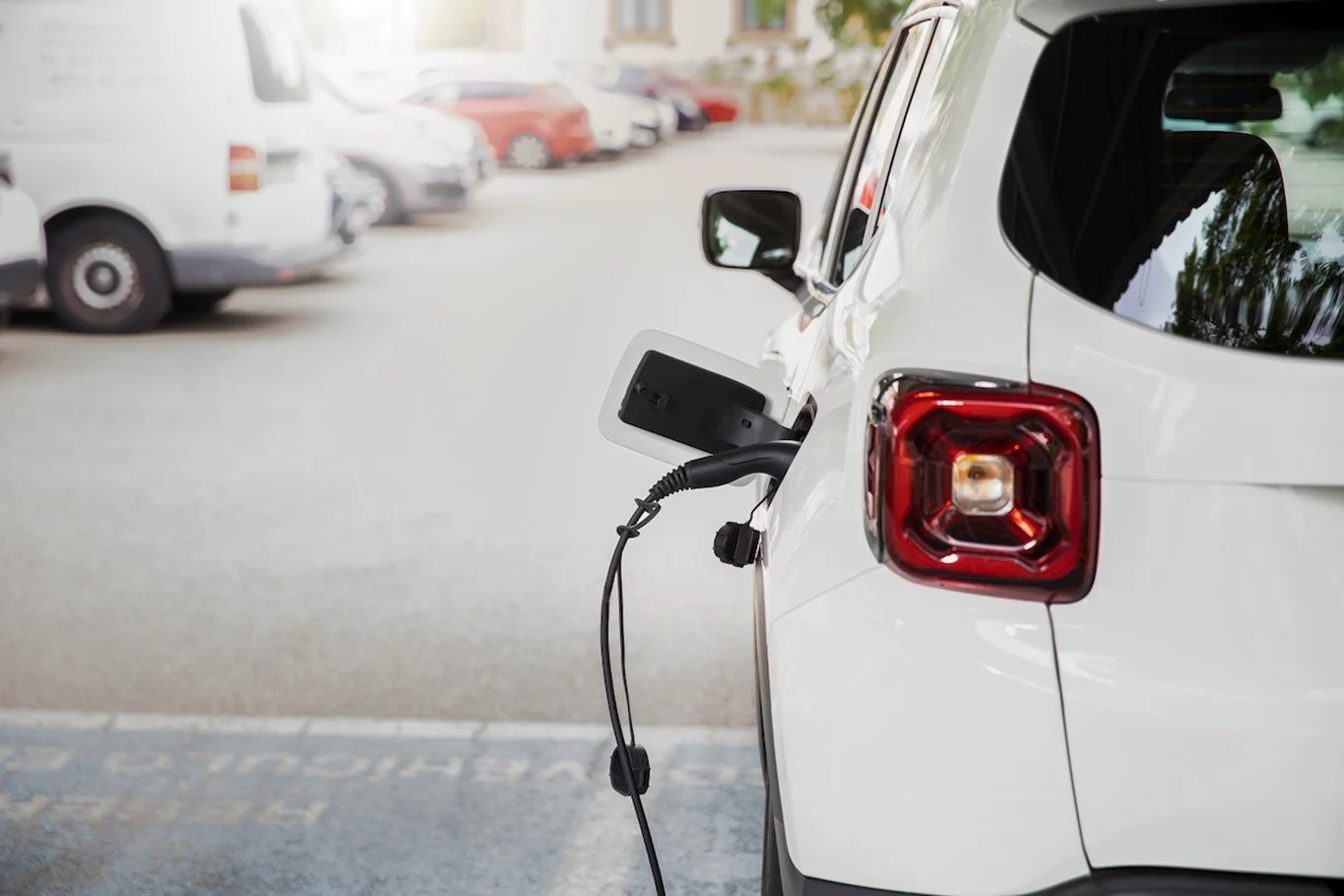
In part because of the war in Ukraine and the resulting boycott of natural gas from Russia, Europe is moving rapidly to create microgrids that combine renewable generation with large battery storage and bidirectional flows for large numbers of EVs. Utrecht in the Netherlands is considered the largest bidirectional city. One of their projects is a parking facility, covered by 2,100 solar panels that provide power to 450 bidirectional charging stations and next-door buildings. The city is planning for 10,000 bidirectional EVs, 10 percent of their total.

There are many advantages to this combination beyond the free parking that bidirectional cars receive when plugged in. By connecting EVs to the grid, utilities need less reserve capacity on hand for peak periods. Utility costs are reduced, and car owners can save up to 50 percent on electric bills. For energy purveyors, the price of electricity changes from minute to minute as supply and demand surge or ebb. Those managing bidirectional systems buy power when solar and wind power are abundant and cheap, store it in electric vehicles, and sell it when demand and prices climb. It’s an old business strategy — buy low, sell high.

Ford, GM, BMW, Mercedes-Benz, and Renault are currently selling EVs with two-way charging software. All EV manufacturers are planning bidirectional cars by 2026. To underline the potency of this approach, California has 70 gigawatts of storage in all the EVs on our roads. In comparison, the total battery storage in all our homes and buildings is only 2-3 gigawatts.

When EV stored power is given back to buildings or the grid, the amount is small and limited by the bidirectional software, or by the decision of the EV owner. Typically, the giveback is equivalent to 10 miles, while keeping enough stored for at least an 80-mile range. However, many EVs giving back, each one only a little, adds up to damping supply and demand swings and big savings to customers and utilities. This approach is also an important tool in countering climate change.

The Big Picture on Electric Vehicles

Fewer Vehicles and Driving Fewer Miles Needs to Be Our Future

The world is rapidly moving toward electric mobility — bikes, scooters, cars, buses, and trucks. New rules proposed by the Federal Environmental Protection Agency (EPA) for more rigorous tailpipe pollution reduction means that within 10 years, two-thirds of all new cars, half of new commercial vehicles, and up to a third of new 18-wheelers could be electric. California has set new standards that require manufacturers to sell an increasing number of zero-emission freight trucks and buses.

These moves are momentous in tackling the 28 percent of total U.S. climate pollution that comes from transportation. The truck and bus component represents about one-tenth of all U.S. vehicle traffic but accounts for more than half the sector’s air pollution.

A word of caution, however. The fossil-fuel industry, in spite of its public statements supporting clean energy and its massive spending on messaging, sends more lobbyists than any country to every national or international meeting on climate for the purpose of slowing or disrupting progress toward a cleaner energy future. Moreover, it collects $5.2 trillion in subsidies annually (6.5 percent of global GDP) and continues to develop every opportunity to extract more fossil fuel.

Clearly, this pattern of extraction and exploitation must change if the planet is to be saved. Furthermore, cutting back on the amount of energy produced, including renewable energy, will make the transition to 100 percent renewables easier and faster to accomplish. The exception is in the lowest-income countries that need to increase energy use to meet basic human needs. The IPCC (Intergovernmental Panel on Climate Change) indicates that if we want to limit warming to around 1.5 degrees Celsius above pre-industrial levels, then we need to scale down global energy use, mostly in high-income countries. Why in rich countries? Because on average, we consume 28 tons of material stuff per person per year. Focusing on materials has a range of powerful benefits, including taking pressure off ecosystems. It means less deforestation, less habitat destruction, and less biodiversity collapse.

The framework for thinking about electric cars and trucks should include reducing the total number of cars, making them smaller, and reducing miles driven. The best way to achieve this scaling back is to invest in affordable (or even free) public transportation, which is more efficient in terms of materials and energy. Making it as attractive, clean, and convenient as possible is essential.

While sunshine and wind are obviously clean, the infrastructure we need to capture them and the products that use this clean energy are not. Transitioning to them is going to require dramatic increases in extraction of metals and rare-earth minerals with real ecological and social costs. We have deluded ourselves (or been deluded) many times by new technologies or material efficiencies that promise sustainable gains yet lead to more production, consumption, and greenhouse gases. Only by universally applying a net green analysis, which looks at the entire picture and focuses squarely on environmental impact reduction, will we help ourselves and our planet.