
Resiliency

Linking Needed Housing and Climate Resilience Gains

Community Benefits in Exchange for Development Incentives

Housing is a national crisis but a critical one in Santa Barbara. To preserve the charm and special character of our community, we have developed a process of delay and denial for new building projects, especially for new housing. Getting approval for any new project is costly, prolonged, and problematic.

The mindset in our community toward housing is changing as the development of a master plan for the revitalization of State Street has shown. Likewise, the efforts to house our lower-income workers are indicating a new attitude.

The production of housing is not an isolated challenge as the Community Environmental Council’s ecological Principles for the Downtown Core underscore. This Ecological Framework advocates an integrated development model that lays out an urban environment emphasizing the relationship between housing, mobility, shade trees, stormwater management, biodiversity, climate resilience, and the health, happiness, and inclusivity of people.

Key city staff, in consultation with local architects, developers, and environmentalists, have created a Better Buildings Pilot Program. Although still being finalized, it will test whether a flexible, incentive-based, more predictable development framework can accelerate downtown housing production while incorporating defined community benefits. Central to the program is the principle that housing can be climate action, particularly through paring reduced vehicle dependency and greenhouse-gas emissions with a strengthened walkable, compact, parklike downtown.

Applicants would earn points by voluntarily incorporating defined community benefits into their projects. Examples are adding affordable units above the required number, including larger family-oriented units, making units all-electric, planting native landscaping, improving stormwater management, and building paseos and pedestrian connections. Then there are construction impact offsets: adaptive reuse of existing structures, choosing low carbon concrete (concrete is the biggest carbon emitting construction material-eight percent of all planetary greenhouse gases) and using mass timber construction. Points are attached to all these benefits. 

In exchange for providing these community gains, the applicant would apply the accumulated points to receive additional residential density, increased height without separate height exception hearings (keeping the 60-foot City Charter maximum), elimination of parking minimums, and reduced plan check turnaround times. Local developers have said, “more units, more height, flexible parking requirements, and a streamlined permitting process are what make their projects’ economics work.”

This program, per the draft document, “is intended to directly advance the City’s climate resilience, housing, mobility, and ecological objectives by incentivizing development projects that function as integrated ecological infrastructure.”

This five-year pilot embodies nimbleness, flexibility, and the courage to experiment while still complying with State and City Charter requirements. All components and outcomes are to be measurable including urban heat mitigation, stormwater capture, expanded tree canopy, biodiversity support, multimodal connectivity, reduced greenhouse gas emissions, and improved public spaces.

The balance between accelerated new housing and ecological and climate gains will be tracked on an ongoing basis so that adjustments to the Program can be made for optimum results. This has the potential to be a big win for our community. 

California’s EV Charging Milestone

Federal Resistance to the EV Shift Complicates National Climate Progress

The Trump administration has aggressively reversed U.S. climate policy, focusing on fossil-fuel expansion, withdrawing again from the Paris Agreement, and suspending wind and solar renewable energy projects by revoking federal permits. It is rolling back stringent fuel economy standards and boosting manufacturers’ profitability for high-margin gas-powered SUVs and trucks while slowing the shift toward electric vehicles (EVs). The U.S. is now producing more oil and natural gas than Saudi Arabia and Russia combined. The federal government has also ended the pause on liquified natural gas (LNG) exports. These policy reversals are out of step with the rest of the world. 

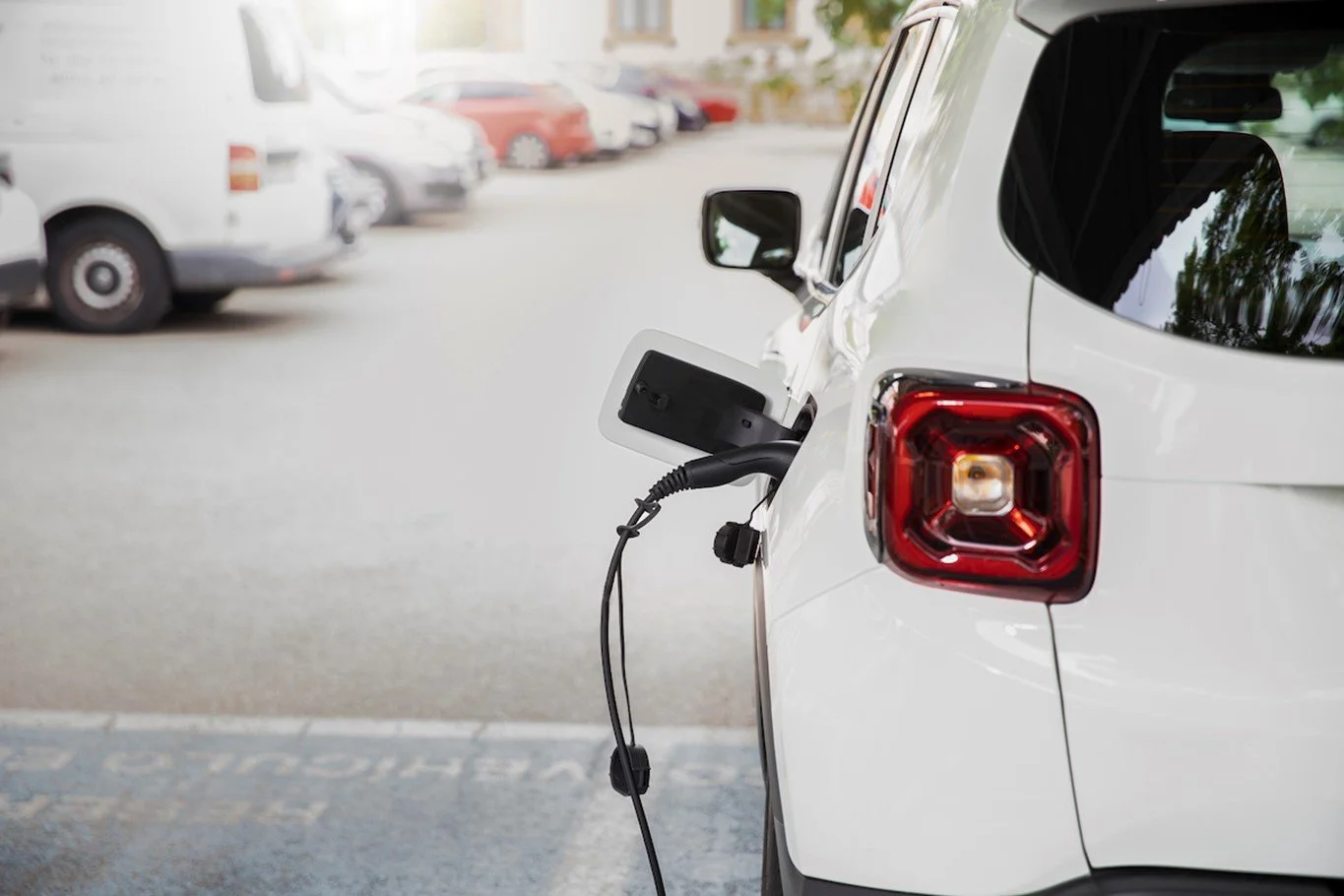
California, however, is still forging ahead in its transition to electric mobility. By 2024, the Golden State had 178,500 publicly accessible EV charging stations, double the number from two years before. For comparison, this number is significantly greater than our state’s 120,000 gas nozzles. California is a leader, in the U.S. and globally, in shifting to sustainable transportation.

According to California Energy Commission’s data, most of the state’s chargers are Level 2, while only 17,000 are fast chargers. Most hybrid vehicles cannot use fast chargers, a factor that influences the higher demand for Level 2 ports. Home installations of EV ports have also been increasing with more than 700,000 Level 2 chargers now in place. This investment complements the state’s public EV infrastructure network.

Although the withdrawal of federal dollars is slowing the transition to clean, electric transportation and increasing greenhouse-gas emissions across the country, California remains committed to substantial investments in EVs. Much of this investment is designated for underserved communities across the state to ensure that EVs become accessible to a broader segment of the population, especially in lower-income areas. California has not wavered on its goal to ban the sale of new gasoline-powered vehicles by 2035. 

Perhaps California’s next innovation into clean energy will be to encourage the installation of solar photovoltaic arrays over parking lots linked to EV charging ports. Bidirectional charging software now allows drivers to help utilities even out their demand curve by offering (for compensation, of course) a small percentage of their EV’s stored electricity. This produces win-win savings: for the utility, the driver/homeowner, and the community. These smart systems are becoming prevalent in Germany, the Netherlands, and elsewhere in Europe. France has recently mandated that all large parking lots be covered by solar panels.

California’s reaching the milestone of more EV charging stations than traditional gas stations, reminds us of the potential for a greener future, even as federal policymakers and some industries push in the other direction.

The Impact of Roads on Nature

The science of road ecology studies the influence of roads on nature. Their findings to date indicate that roads, even unpaved ones, impact the earth in every way and at every scale. But perhaps the most vexing is noise pollution, even more than roadkill, particulate pollution, and constraints on gene pools. Noise bleeds into its surroundings. Eighty percent of the United States lies within a kilometer of a road, a distance at which vehicles project 40 decibels. As traffic swelled in the 20th century, road noise became a public-health issue, depriving us of sleep, impairing our cognition, and producing the stress hormones that lead to high blood pressure.

Most people treat the words “sound” and “noise” synonymously, but they are antonyms to acousticians. Sounds are fundamentally natural and often barely perceptible. Noise, by contrast, is a human-produced pollutant. It is unpleasant. People with good hearing register sounds as low as 10 decibels. Most animals can detect sounds at negative-20 decibels. For most of them, vision is a luxury, but hearing a necessity for survival in the wild. For this reason, most wild creatures try to get as far away from roads as they can, which confounds their migration routes and their propensity to diversify their gene mix.

Ben Goldfarb, in his book Crossings, described research that was done a decade ago on a raised green mesa in central Idaho. This area was a major refueling stop for throngs of southbound migrating songbirds, probably selected in part because there were no roads nearby. The researchers wanted to observe how these travelers would respond to amplifiers placed in the area broadcasting traffic noise from dawn to dusk. On days when the recording was played, bird counts plummeted, some species avoiding the area altogether. They found those who did stop were skinnier because they had to devote more time scanning the skies for hawks, rather than eating berries and beetles while being alerted to danger by the alarm chirps of chipmunks or martens. For the first time, this research verified that noise alone could impinge on animals’ survival.

Some national forests’ rangers and administrators are starting to push for the removal of forest service roads, concluding that the best way to create quiet habitat for wildlife is to not have roads through wilderness areas.

As Goldfarb put it at the end of his book, we need “a solar panel on every roof, a wetland on every floodplain, a wildlife crossing at every migration corridor” to reverse our devastating impact on the natural world and become a more benign presence. He continues, “And our investment in crossings must be matched by our commitment to habitat preservation: an overpass whose surroundings get developed into strip malls and condos is just an expensive bridge to nowhere.”

Congress’s recent infrastructure bill allocates $350 million for wildlife crossings and road-ecology interventions, the largest investment ever in road removal and animal-friendly infrastructure. 

Transforming Concrete from a Carbon Emitter to a Carbon Sink

Carbon-Negative Concrete Will Be a Game-Changer for the Building Industry


There are only a few countries that are carbon-negative, and they are all small. Only one has been officially certified, and that is the Kingdom of Bhutan. It offsets four times as much carbon as its economy emits.

Most materials have a positive carbon footprint, meaning that the harvesting, extraction, manufacture, and shipping related to them releases carbon, or in other words, that they contribute to the climate crisis. Steel, concrete, and aluminum are among the worst offenders.

The building sector has been a major contributor to carbon emissions. Cement, the binder component of concrete, accounts for 8 percent of global carbon emissions, or 25 percent of all industrial emissions. One ton of cement emits almost a ton (0.9) of carbon. If we could populate an imaginary country with all the cement manufactured every year, it would be the third largest carbon-emitting country, trailing only the U.S. and China.

Universities and private companies are researching ways to reduce concrete’s carbon impact. One company, Partanna Global, has developed a concrete that minimizes CO2 emissions during manufacture while offsetting these few emissions by absorbing carbon from the atmosphere during the curing process. According to the company, it is as versatile and affordable as traditional concrete, and in addition, it is stronger and more durable.

Of course, the company does not reveal its proprietary formulas, but does say it uses steel slag, a biproduct when iron ore is turned into steel. It also uses desalination waste, a chemical left behind when brine or saline water is made potable. This alkaline, calcium-laced water saturates the slag during formulation, creating reactive compounds that absorb CO2 into the concrete mix to become the binding agent. Moreover, these reactive compounds continue absorbing carbon from the air throughout the life of the concrete.

 Since cement, a key component of concrete, is ubiquitous in buildings, Partanna, by developing a carbon-negative concrete, has been able to easily take the next step and create carbon-negative homes. They have built their first negative homes in the Bahamas and have secured an agreement with the government to build 1,000 more. Each of these modest 1,250-square-foot homes will capture 182 tons of CO2 from the air, the equivalent to the annual carbon absorbed by more than 5,000 mature trees.

Another factor that helped convince the Bahamas to commit to these new homes is that the concrete gets stronger when exposed to seawater, whereas traditional concrete is weakened by this exposure. This makes it ideal for low-lying communities faced with the threat of sea rise and storm surges.

Carbon-negative concrete would shift the building industry from being one of the biggest contributors to climate change to helping heal the planet, while recycling waste products into the concrete.