
Energy & Water Efficiencies

The Big Picture on Electric Vehicles

Fewer Vehicles and Driving Fewer Miles Needs to Be Our Future

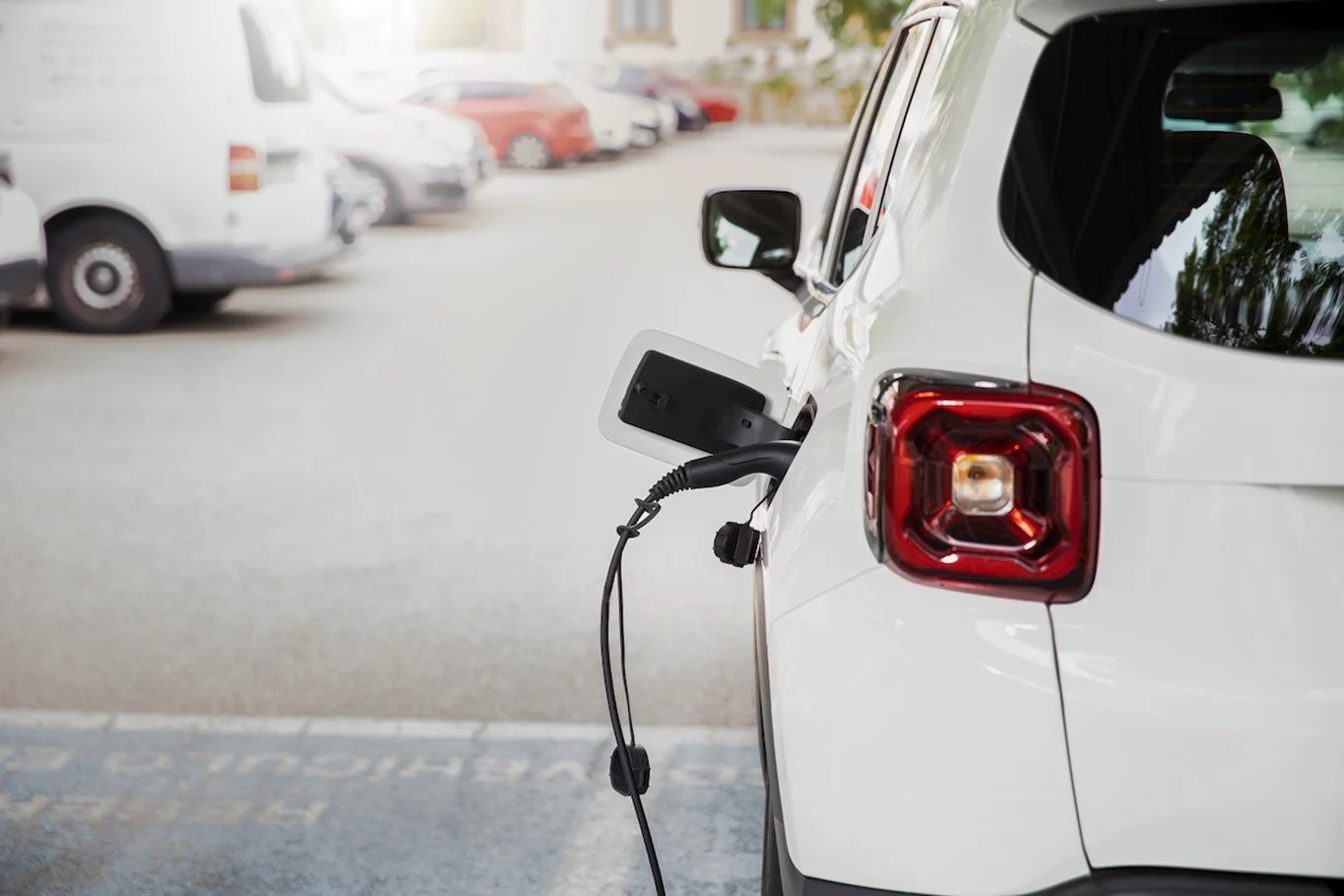
The world is rapidly moving toward electric mobility — bikes, scooters, cars, buses, and trucks. New rules proposed by the Federal Environmental Protection Agency (EPA) for more rigorous tailpipe pollution reduction means that within 10 years, two-thirds of all new cars, half of new commercial vehicles, and up to a third of new 18-wheelers could be electric. California has set new standards that require manufacturers to sell an increasing number of zero-emission freight trucks and buses.

These moves are momentous in tackling the 28 percent of total U.S. climate pollution that comes from transportation. The truck and bus component represents about one-tenth of all U.S. vehicle traffic but accounts for more than half the sector’s air pollution.

A word of caution, however. The fossil-fuel industry, in spite of its public statements supporting clean energy and its massive spending on messaging, sends more lobbyists than any country to every national or international meeting on climate for the purpose of slowing or disrupting progress toward a cleaner energy future. Moreover, it collects $5.2 trillion in subsidies annually (6.5 percent of global GDP) and continues to develop every opportunity to extract more fossil fuel.

Clearly, this pattern of extraction and exploitation must change if the planet is to be saved. Furthermore, cutting back on the amount of energy produced, including renewable energy, will make the transition to 100 percent renewables easier and faster to accomplish. The exception is in the lowest-income countries that need to increase energy use to meet basic human needs. The IPCC (Intergovernmental Panel on Climate Change) indicates that if we want to limit warming to around 1.5 degrees Celsius above pre-industrial levels, then we need to scale down global energy use, mostly in high-income countries. Why in rich countries? Because on average, we consume 28 tons of material stuff per person per year. Focusing on materials has a range of powerful benefits, including taking pressure off ecosystems. It means less deforestation, less habitat destruction, and less biodiversity collapse.

The framework for thinking about electric cars and trucks should include reducing the total number of cars, making them smaller, and reducing miles driven. The best way to achieve this scaling back is to invest in affordable (or even free) public transportation, which is more efficient in terms of materials and energy. Making it as attractive, clean, and convenient as possible is essential.

While sunshine and wind are obviously clean, the infrastructure we need to capture them and the products that use this clean energy are not. Transitioning to them is going to require dramatic increases in extraction of metals and rare-earth minerals with real ecological and social costs. We have deluded ourselves (or been deluded) many times by new technologies or material efficiencies that promise sustainable gains yet lead to more production, consumption, and greenhouse gases. Only by universally applying a net green analysis, which looks at the entire picture and focuses squarely on environmental impact reduction, will we help ourselves and our planet.

Heat Pumps Are Becoming a Part of Our Future

Lower-Income Families Can Now Have Better Health, Reduced Utility Bills, and More Comfort


Nearly half of residential buildings in the U.S. were constructed before 1973, when building code energy standards were virtually nonexistent. As a result, most homes and residential buildings still rely on old technologies for heating and cooling: furnaces and boilers for heating and big rooftop air conditioning units for cooling.

Heat pumps, however, are gaining traction. The same piece of equipment can provide heating and cooling. Heat pumps are powered by electricity but have efficiencies 3-5 times that of fossil-fuel heating systems. Despite the name, heat pumps do not generate heat; they move it from one place to another. In heating mode, they absorb latent heat energy from the outside air, even cold air, and transfer this heat to indoor air. The condenser and evaporative coil, which are located outdoors, use a liquid called a refrigerant to soak up heat and move it indoors or capture it indoors and release it outside, depending on where heat or coolness is needed. The source of thermal energy for a heat pump can be the air (an air-source heat pump) or the ground (a ground-source heat pump). 

Refrigerators are heat pumps but with the condenser located at the back or bottom of the appliance. We feel heat around a refrigerator because it is pulling heat out of the cold air inside the unit, thereby making it even cooler. A big plus that heat pumps offer is improved indoor air quality because there is no combustion.

There are also heat-pump water heaters and heat-pump clothes washers and dryers. Efforts are underway to create a household system where one compressor placed outside can power these various heat-pump services. 

It has been known for decades that saving energy is cheaper than creating fossil-fuel energy. Investing in such efficiencies has among the best return-on-investment. In 2021, Americans spent an average of $1,380 per year on energy bills. Installing efficient windows; preventing air leaks; insulating roofs, attics, crawlspaces and walls; and changing existing lighting to LEDs, together with investing in heat pumps, can cut utility bills by more than half.

The Inflation Reduction Act that President Biden signed into law last August invests $369 billion in climate reducing strategies over the next decade — a big part of which will go for energy retrofits and electrification of homes for moderate-income and disadvantaged families. The many jobs created by doing these retrofits and improvements will be local and primarily benefit small companies. 

If buildings around the globe are electrified and the sources of that electricity are from renewables, by 2050, one-sixth of the world’s total greenhouse-gas emissions would be eliminated.

People Can Make Rain

Reversing Destructive Land-Use Patterns Can Improve Local Water Cycles

Through an examination of tree rings dating back 2,500 years, scientists have determined that from the 1500s until the 1970s, California was uncharacteristically wet. The latter 130 years of this period cover the modern development of the state. Understandably, planning parameters have been based on overly optimistic figures for rainfall. Not only are our expectations outside the long-term range of weather patterns, but we are making the climate hotter and drier through human-induced climate change.

There are two moisture cycles in nature. The most widely understood one is rain flowing down rivers to the sea, where it evaporates from the ocean surface, condensing into clouds that drift over land to rain again. This, however, only accounts for about half of rainfall. The second cycle is a smaller, more local one. Moisture evaporates from plants, trees, and the soil, making clouds overhead and subsequently falling as rain in the region.

To make clouds, microscopic particles are needed. These were thought to be inert minerals like dust. Only within the past 50 years have scientists begun understanding that bacteria can also be nuclei around which water vapor can coalesce. Studies have shown that cloud-making bacteria exist in every part of the world. One study of cloud-water revealed 28,000 different species of bacteria. Plants and algae create conditions for microbe propagation, of which some become lifted by winds and attract water vapor. Bacteria multiply rapidly and are among the most resilient organisms on the planet.

The knowledge that microbes from plants and soil play a central role in rain cycles over land has profound implications. For example, the removal of vegetation by overgrazing or exposing bare soil in monocrop farming can create conditions for drought. Conversely, the restoration of a plant-rich ecosystem could increase precipitation. Cloud-seeding bacteria can be deliberately cultivated to boost water cycles. 

Reversing destructive farming, ranching, and forestry practices creates opportunities to restore carbon stocks in soil, plants, and trees. Healthy, carbon-rich soils store a great deal of water and foster abundant microbial communities, leading to increased evaporation, water vapor, and clouds. Evaporation is usually seen as a loss, something to be minimized. We need to change this perspective and start seeing it as a source of precipitation.

A Dutch company, Water Makers, has a project to transform the upper half of the Sinai desert from brown to green, filled with farms, plants, animals, and forests. Centuries ago, the Sinai was green with life, before degrading activities by people dried it out.

With droughts and wildfires in California ever more frequent, it is time to start transforming our industrial agriculture and landscape into carbon-sequestering soils and plants, thereby improving the local rain cycles.


3D-Printed Houses

Speedily Built, Disaster Resilient, Energy and Resource Efficient, and Attractive

Big challenges face our society and our planet, none bigger or more pressing than climate change. A ray of hope is how innovative new technologies are tackling a number of these challenges simultaneously. In the housing sector, the 3D-printing process, without much publicity, is launching a revolution in construction materials and methods that are addressing affordability, energy-efficiency, durability, and beauty while erecting structures in record time and at scale.

The software, robotics, and new mixes of materials are technically complex but once the large printers, equipped with robotic arms that travel on rails, are set up, the process is simple. Nozzles at the ends of the robotic arms extrude environmentally friendly concrete mixes, plastics, hemp, mud, wood fibers, and other materials in a layering sequence to create solid, three-dimensional walls. Large sections of the building are printed and then assembled. Tech firms and architects are teaming up to produce designs that incorporate undulating curves that would be extremely time-consuming and prohibitively expensive to create using traditional building practices.

Jason Ballard, CEO of one of these pioneering tech firms, says, “With 3D printing, you not only have a continuous thermal envelope, high thermal mass, and near zero waste, but you also have speed, a much broader design palette, next-level resiliency, and the possibility of a quantum leap in affordability. This isn’t 10 percent better; it’s 10 times better.”

This type of construction is being employed in the Netherlands, Mexico, Canada, the U.S., and in areas impacted by natural or man-made disasters where quick rebuilding is urgent. These houses are built to withstand hurricanes and earthquakes. Entire communities are being designed and constructed; sometimes the printing is on-site and sometimes close by. Lennar Construction, one of the country’s largest builders, is building a 100-unit 3D-printed home development in Texas. Austin, Texas, has become a hub of robotic construction in this country. For example, it is turning out 400-square-foot homes to house 480 homeless people, or 40 percent of its street dwellers. The cost is $4,000 per unit. Printing time for an entire home varies between 24 hours and a week and a half, the longer period being for larger custom homes.  

Biophilic design, the recent term for increasing occupants’ connectivity to the natural world, is being embraced in most of these ventures. The mechanical nature of the production process may give the impression of uniformity and starkness, but the irregularities and imperfections of the striations have led some to compare the homes to adobe architecture. Similarly, the softer curves often harmonize with nature. Carefully thought-out, intricately designed print paths accommodate and hide high-performance mechanicals. 

The potential of 3D-printed housing embraces beauty, livability, economy, and resource efficiency while cutting construction time to a fraction of that required by traditional building methods. How quickly will it move to mainstream?