
Electrification

The Battery Storage Challenge Is Being Solved

Researchers Are Using Less Costly, More Abundant, and Environmentally Benign Materials in Battery Innovation


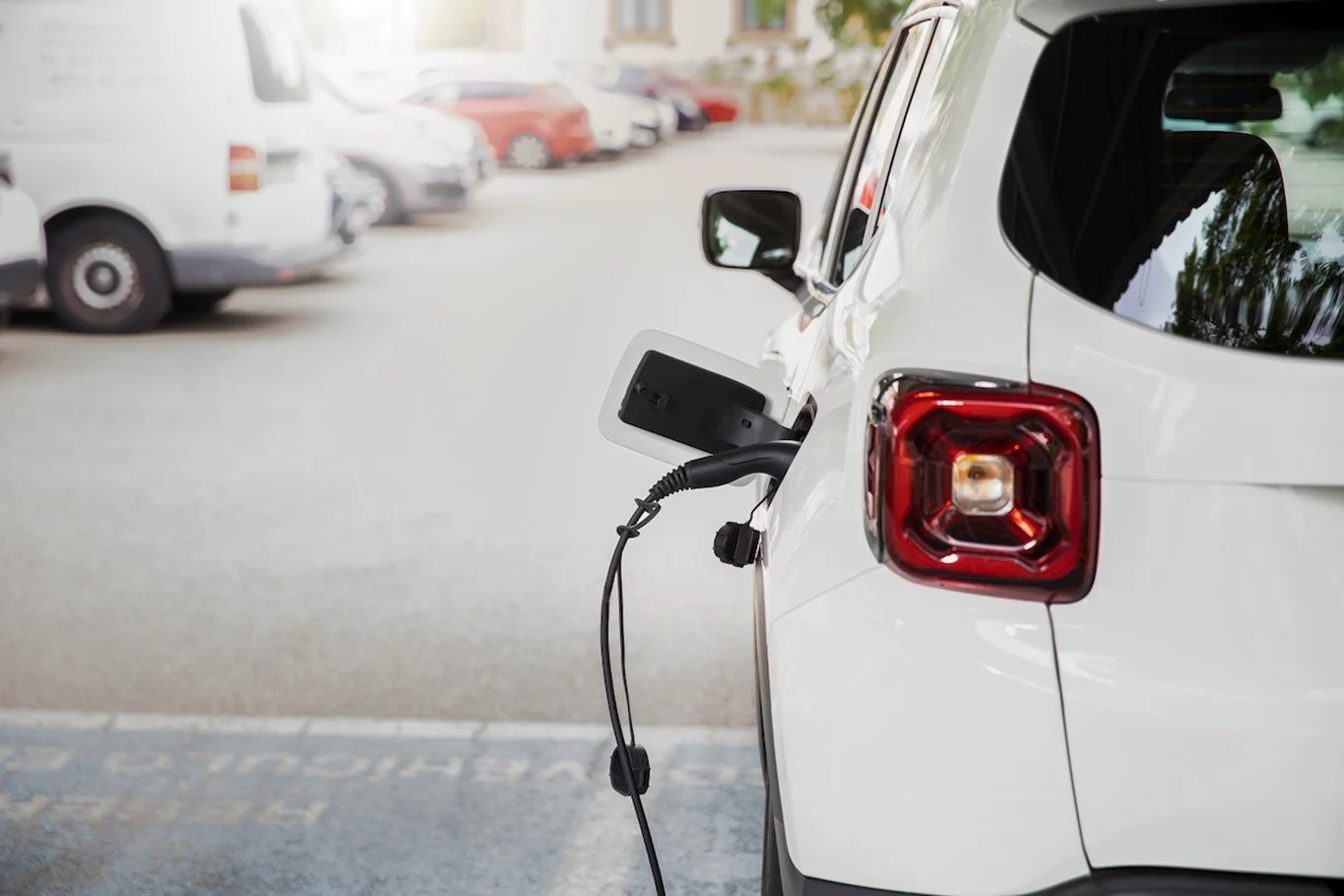
Using electricity rather than fossil fuels to power our world offers many pluses, especially since electricity is increasingly being produced from the sun, wind, ocean currents and tides. Microgrids and sophisticated software monitoring power needs and providing instantaneous switching are making communities even less dependent on fossil fuels for peak demand periods. Battery storage is the key component that will enable us to get to 100 percent clean electricity. One of the biggest obstacles in this trajectory is the limited, costly, and environmentally damaging mining of lithium, nickel, and cobalt — all of which are used in the manufacture of batteries.

A lot of research is going into making batteries using other, more abundant materials with fewer of the drawbacks of current batteries, namely, flammability and spiky dendrites. The spikes are caused when batteries are charged too quickly and result in shortening the battery’s life.

One international team is getting results using aluminum as one of the electrodes and sulfur as the other with a common salt as the electrolyte. The 230-degree Fahrenheit temperature required to melt the salt and run the battery can be generated internally by normal charging and discharging cycles — charging from the sun during daylight and discharging after dark when electricity is needed. The scientists estimate that the cost will be 12-16 percent of today’s lithium-ion batteries.

In Finland, a functioning sand battery seems to solve the problem of year-round green energy for heat. It works by heating sand (100 tonnes) in an insulated silo using electric-resistant heat produced from surplus wind and solar energy. The sand heats up to almost 1,000 degrees Fahrenheit and maintains this temperature for months until demand and energy prices are high. When needed, air flows through a heat exchanger in the sand to extract the heat for use in a district (neighborhood) heating system or for industries that use a lot of heat like food and beverage processing. The town of Kankaanpää is using the first commercial installation of a sand battery.

Researchers at the University of Cambridge have developed a battery system with a non-toxic form of blue-green algae (Synechocystis) that takes in solar energy by photosynthesis. They have used it to power a microprocessor of a computer for more than six months. It is biologically based, produces renewable energy, and multiplies naturally, making it easily scalable. The device does not require any inputs other than sunlight.

Another solution gaining traction is to produce hydrogen from excess renewable electricity and store it until electricity demand is high and renewable generation low.

These are a few of the storage innovations that are likely to be part of the ensemble of processes that get us to our mid-century, carbon-neutrality goal.


Eco-Friendly Cooling Equipment is Coming

Mechanical Cooling Needs to Use Less Energy and Avoid Dangerous Refrigerants

Heat waves are becoming more frequent, more extreme, and more widespread. Air-conditioning (AC) is ubiquitous in the U.S. (90 percent penetration), but not in Europe and many other regions where it is increasingly becoming a necessity. Outside the U.S., less than 25 percent of people in regions that merit AC have it. Consequently, the International Energy Agency expects AC energy consumption to triple worldwide by 2050.

Unfortunately, AC, in its current form, carries significant environmental costs: More demand for cooling leads to more warming of the planet. In addition, the refrigerants used in cooling condensers are 2,000-3,000 times more potent than carbon dioxide as a climate-warming agent when it leaks into the atmosphere.

Gradient Comfort, a San Francisco–based company, is tackling AC’s climate predicament — their mission is to push the industry to zero carbon emissions. Gradient has developed an innovative window cooling and heating unit that is both efficient and eco-friendly. It is a heat pump, a technology gaining in popularity for centralized heating and cooling systems because of energy efficiency, but such equipment tends to be bulky, expensive, and requires professionals to install. Gradient’s technology, however, offers a sleek, affordable, and compact alternative. 

The only Gradient model currently available (it only came on the market this summer) is a window unit. It sells for $2,000 compared to $5,000 or more for comparable units. Their saddle bracket fits on the windowsill of a single- or double-hung window and holds a sleek, attractive fan-coil unit on the inside while the evaporator heat pump is on the outside. Both components fit below the window, so that views are not obstructed. Housed with the fan coil is a quiet fan, eliminating any noise issues. The company is designing other models to fit other styles of windows, e.g., casement units. The unit is planned for do-it-yourself installation in 15 minutes with just a few basic tools. 

Gradient won the Fast Company’s 2022 World-Changing Ideas Award. The cooling component is 30 percent more efficient than traditional window units. When both heating and cooling are combined, the improved efficiency jumps to 75 percent. Another big plus is the refrigerant: Although still a hydrofluorocarbon, the fluid used by Gradient has a quarter the global warming potential of those used by other AC manufactures. They are working to improve their refrigerant even more.

The Gradient device is designed to use only the amount of energy required as it is turned up or down. It is also linked to Wi-Fi in order that it can be self-adjusted when there is heavy demand on the electric grid.

Although Gradient needs more improvements to reach its goal of zero greenhouse-gas emissions, it has taken big first steps in addressing the widespread flaws in existing systems: high cost, cumbersome installations, and unsightliness. These are important directions for widespread adoption of cooling including in less affluent areas of the world.

The Lompoc Strauss Wind Farm

Santa Barbara Is Well on the Way to 100 Percent Renewable Electricity

A small group of us had the privilege of recently touring the Strauss Wind Energy Project in Lompoc while it is under construction. It is the first and only wind project permitted anywhere along the California coast. From the first earlier permitted version of 65 generators, it has been scaled back to 27 machines, yet with the capacity to produce 100 megawatts of electricity.

Reducing the number of turbines has significant environmental and economic benefits. Major advances in “wind” technology during the past 10-15 years have boosted the output possible for a single generator. Each Strauss platform is rated at 3.8 megawatts, the largest land-based turbine available in the U.S. Blades are 227 feet long, the towers 492 feet tall. Scheduled completion date is December this year. Once operational, project will produce the electricity to power 45 thousand houses. For the next 30 years, it will keep six million metric tons of CO2 from entering the atmosphere and warming the planet. This is the equivalent of not driving 16 billion miles. In addition, it will infuse $40 million into Santa Barbara’s tax coffers.

The next wind project along the California coast will likely be offshore, either in the ocean off Morro Bay or off the coast of Humboldt. Both zones have received federal and state approval and are being readied for bulk permitting. The Biden administration recently approved a Massachusetts plan for the nation’s first commercial-scale offshore wind farm. A dozen other East Coast offshore wind projects are now under federal review. Unlike the East Coast, California faces the logistical challenges posed by a deep ocean floor. Evolving technologies, developed mostly in Europe, now make wind generators on floating platforms feasible, as well as even larger ones than land-based units. There is a wind farm with 6-megawatt turbines operating in the North Sea. There is also a 14-megawatt turbine that has been successfully producing for two years in Rotterdam Port.

Santa Barbara has set a goal of 100 percent renewable electricity by 2030. The adoption of community choice energy programs in the Tri-Counties, an initiative advocated and led by the Community Environmental Council, now has 1.4 million households getting at least 50 percent of their electricity from renewables, and many as much as 100 percent. All will be getting to the 100 percent goal by the end of this decade. The Strauss wind farm, when it comes online, will be a big component of local clean energy production.

Wind energy is an ideal complement to solar energy because winds tend to be strongest in the evening and at night. The distributed photovoltaic panels on buildings throughout the County together with the 40-megawatt Cuyama solar farm and the 100-megawatt Strauss wind farm will produce about two-thirds of the electricity Santa Barbara consumes. The county is well on the way to meeting its 2030 goal.

Electric Homes Run Off Sunshine

Harnessing the sun for our electricity, hot water and space heating is practical and cost effective whether remodeling or building from the ground up. After maximizing use of the sun, consider going all electric, since some or all of your electricity can be site-generated. When pursuing this strategy, it is most cost effective to reduce electrical loads (LEDs, Energy Star appliances, etc.), as fewer photovoltaic panels will be needed.

Heat pumps fit nicely into this strategy. They can heat or cool a home, provide domestic hot water, refrigerate your food and even dry your clothes. Heat pumps use electricity to move heat from one place to another instead of generating heat directly. Their high efficiency results from their capacity to transfer more energy (heat) than the energy they require to operate. They are rated by COP (coefficient of performance), the ratio of useful heating or cooling provided compared to the work required. Although they have been around for many years, recent improvements greatly increase their efficiency, achieving COPs in the 2-3 range (compared to 0.8 for efficient gas furnaces or water heaters). Variable-speed motors and scroll compressors in lieu of piston compressors are key recent advances that lower energy consumption, minimize noise and reduce maintenance. Heat pumps work best in moderate climates.

For the non-scientist, heat pumps conjure up notions of alchemy: extracting heat from already cold outside air and transferring it inside to heat the home, or when it’s hot outside, reversing direction to act like an air conditioner, removing heat from the home.

Heat pump appliances such as refrigerators, dryers or water heaters have condensers built in, while space conditioning heat pumps have two main components—an outdoor condenser and an indoor air-handling unit. In recent years, mini-split or ductless units have become popular, because of their small size and zone heating/cooling capabilities. Many models can have as many as four indoor air-handling units connected to one outdoor compressor. Each zone has its own thermostat for optimum control. It is critical that each unit be properly sized for its space to run at maximum efficiency.

Mini-splits are quick and easy to install and offer great design flexibility. They are especially practical for additions and remodels. Ductless systems offer multi-stage filtration that can drastically reduce dust, bacteria, pollen, allergens and other particulates in the air.

Heat pump equipment costs the same or slightly more than comparable natural gas equipment, but if run off sun-generated electricity, the savings add up rapidly. Even if run off utility-generated electricity, the super efficiency, along with the 30 percent federal tax credit, makes it the more economical choice. I am convinced that the all-electric home run off the sun is the future.