
Electrification

Electrify, Electrify, Electrify

Each Time We Replace an Appliance Is an Opportunity to Reduce Warming Emissions 

Until recently, most of us have not had choices about the power we consume: the gas for our cars or the fuel used to produce our electricity. Most supply-side choices are made by giant corporations. Fortunately, the game is shifting, at least in California and a few other states, where community choice energy programs with more clean energy, often 100 percent, are increasingly available. Santa Barbara, City and County, now have community choice programs. This is changing the supply side of the equation.

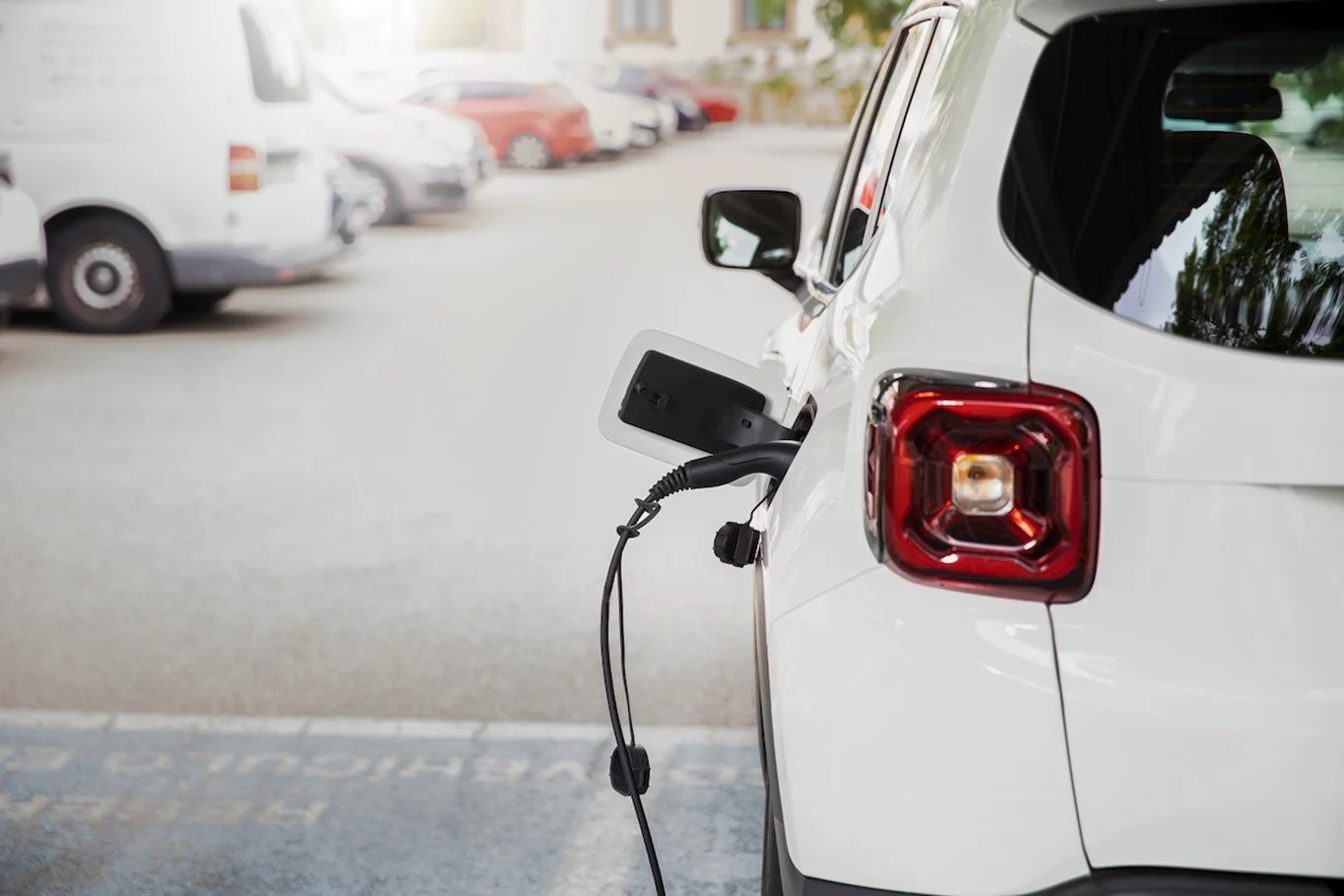
On the demand side, however, we have always had more influence: We decide what we drive, how we heat our water, what heats our house, what cooks our food, and what dries our laundry. For the past 50 years, the climate focus related to the machines and appliances we routinely buy has been on efficiency — mandated vehicle fuel standards, tighter houses through more rigorous energy codes, and Energy Star appliance performance ratings. Efficiency policies are not going to get us to zero emissions, however, certainly not fast enough to address the urgency of the climate crisis. Electrifying everything can, however, go a long way toward solving the problem — and rapidly. How fast? As fast as appliances need replacing: cars roughly every 10-20 years, home furnaces about every 20 years, and kitchen and laundry appliances every 10-15 years. 

Thankfully, we now have good choices for these replacement purchases, and they are getting better every year. Electric cars currently have good range, are close to cost parity with combustion cars, and save money every mile we drive. Air-source heat pumps for heating, cooling, and hot water now perform four or more times better than traditional appliances. The modern induction cooking experience is better than cooking with gas and is twice as efficient.

Dispersed rooftop solar can be the cheapest energy source, but we make it cost more than it needs to by cumbersome, lengthy permitting and inspection requirements. Whereas the installed cost is around $1 per watt in Australia, it ends up near $3 per watt in the U.S. When the U.S. is fully electrified, 20-30 percent of electricity can be generated locally on rooftops, and the remainder will need to come from wind farms, utility-scale solar farms, geothermal wells, and hydroelectric facilities.

Thinking about addressing climate change can be overwhelming and depressing. Replacing fossil-fuel equipment with electric units will enable us to be and feel part of the solution, without sacrificing the conveniences of modern life. Moreover, the long-term economic benefits are not only in utility bill savings, but in creating jobs. Several studies link 25 million new jobs to mass electrification in the U.S. Many of these will be local.

Once we shift to clean energy, we’ll be able to enjoy all the comforts — warmth, air-conditioning, zippy cars, and hot water — but with lower costs and cleaner air. 

Greening a Bathroom

Bathrooms, along with kitchens, are the most expensive spaces to construct in a home, because of the plumbing needed, the greater density of lighting and numerous appliances. To create a sustainable bathroom, it must be energy efficient, use minimal water, be comfortable, non-toxic, quiet and basically maintenance free.

California codes keep nudging all new and remodel construction to be more sustainable. Consequently, any remodel project today triggers upgrading ALL plumbing fixtures throughout the home or business. The most recent State standards are: 1.8 gallons per flush for toilets; 1.2 gallons per minute (gpm) for bathroom faucets and 1.8 gpm for showerheads, giving California the toughest standards of any US state. For comparison, these flows are about a quarter or less of what was standard 3-4 decades ago.

Not only are these standards saving hundreds of billions of gallons of water each year, but also lots of energy and greenhouse gas emissions, since 19 percent of energy consumed in California is used to pump, transport, treat and heat or cool water.

Selecting an efficient and effective showerhead has become easier in the last decade, due to the Federal WaterSense program. To carry the WaterSense label, a showerhead must list its flow rate, which must be below the maximum allowable federal standard, and meet strict user satisfaction standards. A popular WaterSense model by Niagara, rated at 1.5 gpm and receiving stellar customer reviews, costs only about $8.

A promising development that cuts water consumption even more is the atomizer mist technology. Showerheads using this approach disperse water through millions of microscopic droplets into an effective wet area while saving 70 percent of water. Similarly, with sink faucets, the fine mist produced is a 98 percent reduction in water use, with no loss in functionality.

Controlling humidity in bathrooms is key to promoting health. Good natural ventilation (operable windows) as well as effective air-moving equipment avoids mold, mildew and rot. A good bathroom fan needs to move about 150 cubic feet of air per minute while having a noise rating of 1 sone or less, making it virtually unnoticeable.

The leading green-building thinking today emphasizes all electric homes, where the loads are minimal, and the power needed is produced on-or-off-site by the sun or wind. LED lighting and super-efficient equipment keeps loads to a minimum without sacrificing performance. Hot water can also be heated by solar electric panels or directly by solar thermal panels. Water and heat can be additionally saved by on-demand hot water delivery. At the push of a button, a pump turns on, rapidly bringing hot water to faucets while pushing the cold in-line water out into the cold-water lines rather than wasting it down the drain.

Good insulation, high performance windows, using only non-toxic materials and avoiding carpeting are additional strategies to improve sustainability in bathrooms and are even more important for the entire house. Savings on water and electricity are often easily calculable. Putting a price on good health is not easy but for most of us it is priceless.

Creating the Eco-Friendly Kitchen

The framework for an environmentally friendly home and kitchen is being all electric. Electricity is increasingly being generated by renewables, either on or off site, thus avoiding the pollution and climate issues linked to using fossil fuels. Clean electricity has none of the harmful health issues tied to home gas appliances. A Federal EPA report asserts that a gas stove adds between 25 and 39 percent more nitrogen oxide and carbon monoxide to the air in a home.

Fortunately, a great alternative to gas stoves exists in the electric magnetic induction cooktop. Because it directly heats a pan using magnetic fields, an induction unit can provide great power, instant adjustability, excellent thermal efficiency and precise control—better than with gas cookers and without the negative impact on indoor air quality. The energy efficiency of induction coils is approximately double that of gas burners.

To create an eco-kitchen, all appliances need to be minimally Energy Star rated. The Energy Star label, a Federal program that evaluates energy efficiency of household appliances, enables shoppers to knowingly purchase appliances that use the least energy and water to operate. Created in 1992, the program now covers 40,000 products and saves more than $30 billion (2013) in energy costs annually.

Choose cookware and utensils that stand the test-of-time and won’t have to be thrown away and replaced. Stainless steel and cast iron are good choices for pots and pans (also metallic cookware is required for magnetic induction cookers). Similarly, choose high-quality knives. One only needs a few good ones, plus they stay sharp longer.

Good natural lighting and ventilation can reduce the need for artificial lighting and mechanical ventilation. Carefully locating windows and skylights can improve the ambiance in a kitchen and enhance air quality. When needed, electric lighting is best provided by LEDs (light emitting diodes). They are super-efficient—requiring fewer photovoltaic solar panels—and provide excellent task lighting.

Equipment, lighting and ventilation are important, but one’s devotion, passion, common sense and experience focused on efficient food prep and cleaning habits are as key, if not more so, in creating an eco-friendly kitchen. Examples:

·         Use cloth towels rather than paper towels.

·         Avoid bottled water.

·         Buy cleaning products from companies that make non-toxic, biodegradable, plant-based products

·         Shop at the farmers’ market for local, fresh, organic, highly nutritious food without packaging.

·         The difference between ordering takeout and tossing together a salad with farmers’ market ingredients shifts from big to small impact on our agricultural system and the larger eco-systems. Food accounts for a greater portion of our ecological impact than home energy.

·         Minimize gadgets.

·         Don’t install a garbage disposal. Learn how to compost. Set up for easy recycling.

·         Design an open pantry for maximum convenience.

·         Have only drawers below counters. Avoid cabinets with doors and pull-out shelves. They require 2 operations every time one accesses a cabinet.

Energy Upgrades for Existing Homes

Information on how to build an energy efficient home is easy to come by these days—but what if you can’t start from the ground up? What about the 18 million homes that already exist in California? Are those of us living in existing homes relegated to changing light bulbs and adjusting thermostats?

Not at all. Enter the Home Performance contractor. Home Performance is the discipline of applying building science and retrofit techniques to existing buildings, and the results can be dramatic; numerous case studies cite total measured energy used by the home reduced by as much as 70%!

Building science developed in the 1980s along with sophisticated equipment making possible the measurement and study of buildings. By applying these tools and scientific principles, we now know how to transform the energy performance of buildings.

The good news doesn’t stop there. It turns out that many of the same retrofit measures that reduce energy use also improve the quality of indoor air, humidity and moisture levels plus the overall longevity of the structure itself. The benefits are many and varied, from reduced indoor allergies to less frequent dusting to decreased home repair work.

But what goes into an energy upgrade? Since every home is unique, a good Home Performance contractor starts by running tests to understand exactly what is needed for the specific building. With this data, the contractor then recommends the upgrade measures for maximum improvement.

Because most homes are “leaky”—that is, air can pass more or less freely between indoors and out, the first priority is to stop the leaks. Typically, we spend energy (and money) to heat or cool our indoors, but, because of leaks, we end up heating or cooling the outdoors. Home heating and cooling is by far the biggest use of energy in homes, so stopping this energy wastage represents a key first step used by the Home Performance contractor.

Most of us think of windows when we think of building air leaks, but the science shows us that windows are usually not the main culprit. Because warm air rises (the stack effect), most air escapes at the top and bottom of buildings, through the attic and the crawlspace. Consequently, air sealing is one of the most important strategies. With this single measure, both energy use and indoor air quality can be improved.

One caveat, this work should be done by a professional trained in building science and home performance. Tightening a home can have unsafe side effects. For example, if gas appliances are present, there is a danger of trapping noxious, life-threating fumes inside the home. A professional will understand these risks, and will use test equipment to verify that they’ve been avoided.