
Decarbonization

Attacking Emissions by Removing Ocean Carbon

Simplification and Scalability Make Taking Carbon Out of Seawater Auspicious

We now realize that addressing climate change requires more than reducing our greenhouse-gas emissions to zero, a challenge that all efforts to date have been woefully inadequate in achieving. For this reason, researchers around the world are looking for effective and economical ways to sequester CO2 from the atmosphere. A number of solutions are showing promise; some are in the trial phase. A research team at UCLA’s Institute for Carbon Management is exploring a totally different approach to atmospheric drawdown.

The UCLA scientists have developed a flow reactor that takes in a continuous flow of seawater and runs it through a mesh charged at a specific electrical frequency to render the water alkaline. This kicks off a chemical reaction that combines the dissolved CO2 with naturally occurring calcium and magnesium abundant in seawater. The outcome is limestone and magnesite. This process is similar to how seashells form. The yielded minerals are durable, safe, and permanent. The seawater that flows out of the back end of the reactor is depleted of dissolved CO2 and thus ready to absorb more carbon from the skies. The only other byproduct is hydrogen, a clean fuel.

There are several key advantages to this approach. First, a given volume of seawater holds about 150 times more carbon than an equivalent volume of air. Second, it is a single-step carbon sequestration and storage (sCS2) process, unlike the multi-step atmospheric sequestering processes being explored. This simplification gives it economic and scalable benefits.

The oceans and the atmosphere work in a constant state of equilibrium. The oceans have countless plant-like organisms called phytoplankton that absorb CO2 through photosynthesis. As humans have pumped more carbon emissions into the atmosphere, the oceans have absorbed more carbon, making them more acidic and contributing to the die-off of coral reefs and threats to some shellfish.

Many approaches to sequestration are needed and soon. The economics of various approaches will be key to which becomes ascendant. Drawing down a large percentage of the 37 billion metric tons of CO2 we produce annually is daunting. The single-step simplification of the UCLA approach, its scalability, its taking inspiration from nature, and the commercialization of the solid mineral and hydrogen by-products offer a major contribution to the race to capture carbon emissions.

The 15-Minute City

Making Cities More Human, Equitable, Convenient, and Healthy


A new concept of urban planning and redevelopment is gaining popularity: the 15-minute city. All basic needs — fresh food, schools, offices, banks, gyms, health care facilities, parks, shops, and a variety of entertainment — would exist within a 15-minute walk or bike ride from your home or apartment. Paths and streets would be safe, tree-shaded, and mostly car-free. One or more public transit stops would be within this radius to connect to other neighborhoods and parts of the metropolitan region. 

C40, a network of the world’s megacities committed to addressing climate change, has adopted this planning concept as a key strategy in reducing pollution, GHG emissions, and social inequities. Portland, Madrid, Seattle, Milan, Edinburgh, and several Chinese cities are incorporating the core elements of the 15-minute city:

  • Make available essential goods and services, especially fresh food and health care

  • Include housing of different sizes and levels of affordability (convert former office buildings to housing)

  • Locate frequent and reliable public transit connections nearby

  • Invest to make walking and biking the determinant of scale, not the automobile

  • Create attractive streetscapes; pocket parks; and safe, designated bikeways

  • Promote mixed-use buildings, telecommuting, and digitalization of services. Strengthen access to technology to reduce the need for commuting

  • Prioritize government investment in underserved and lower-income neighborhoods and encourage businesses and nonprofits to follow suit

Paris is the city that has moved the fastest and furthest in implementing the 15-minute city. It began some years ago as an early adopter of large-scale, city-wide bike sharing. In 2016, two major car arteries along the river Seine were closed to vehicles and turned over to pedestrians. Paris’s mayor, Anne Hidalgo, has implemented an ambitious plan to restrict cars on many streets while increasing infrastructure for walking, cycling, and people-oriented economic development. The city is completing 1,000 kilometers of bike paths, and 60,000 parking spots for private cars are being eliminated on streets to make a bike lane possible on every street. 

Paris is increasing green spaces, encouraging urban agricultural projects, and advocating using schools, libraries, and other public spaces for multiple purposes, even during off-hours. Paris has been more people-centrist than most cities, with abundant sidewalk cafés, squares, fountains, bridges, and green spaces. Implementing the 15-minute city concepts will strengthen its mosaic of walkable neighborhoods that meet the domestic, professional, and entertainment needs of residents. A key is mixing as many different activities as possible in an area.

Sustainable Flooring Options

What properties, besides cost, warrant consideration when considering flooring choices? Health issues such as toxicity or the avoidance of bacteria, dust and allergens need foremost attention. Health concerns should disqualify carpeting. Although there are eco-friendly choices for carpeting, such as wool, sisal, P.E.T. Berber (made from recycled plastic bottles) and carpet tiles, none of these avoid the inherent problem with all carpeting: the trapping of dirt, mites, pesticides and chemicals tracked in from outside. The AIA (American Institute of Architects) did a study some years ago, weighing newly installed carpeting that was steam cleaned weekly over its 10-year life and weighing it again when pulled up. Despite the rigorous cleaning schedule, it weighed 3 times its original weight. No cleaning method can completely remove the dirt and bacteria that get ground into carpeting.

If we rule out carpeting, what are other good choices? Wood flooring is one. Durability, recycled, reclaimed or renewable material, and transportation distance are key criteria for environmentally-friendly flooring. Taking these measures into account, wood flooring rates high. Solid wood flooring is not usually considered sustainable due to deforestation concerns, but wood from forests that are responsibly and sustainably managed and that carry the FSC (Forest Stewardship Council) certification guarantee negate any such worry. Reclaimed wood milled into flooring or, even better, reclaimed wood flooring is another way to get attractive flooring without logging existing forests. Then there is pre-finished, engineered wood flooring (FSC certified). Engineered wood is more stable than sawn boards, uses less wood per square foot, and avoids off-gassing when toxic-free adhesives are used. 

Although frequently considered along with wood flooring, bamboo is actually a rapidly growing grass and thus supremely renewable. Make certain the bamboo is mature, 4-6-year growth, because flooring made from 2-3-year-old bamboo is soft and scuffable. A variation, strand woven bamboo, has more of a wood grain look, is stable and extremely hard—twice as hard as oak. The only drawback to bamboo is that most of it comes from China, requiring transportation half way around the world.

Concrete isn’t usually thought of as sustainable or as flooring. When made with a high percentage fly-ash mix, concrete becomes considerably greener. Fly-ash is a waste product from coal power plants that can be substituted for cement and greatly reduces its greenhouse gas emissions. Concrete slabs can be turned into beautiful, eco-friendly flooring through selection of score pattern, use of organic dyes and careful polishing—often being made to look like stone, tile or old leather. As finish flooring, it saves the expense and material needed to install another finish floor over it. Concrete flooring contributes to high-quality, indoor air.

Other sustainable flooring choices are: naturally cushioned, anti-microbial, sound and thermal insulating cork (bark from cork oak trees); linoleum made from linseed oil, cork dust, tree resins and limestone; and glass tiles made from recycled glass bottles.

Flooring can be beautiful, easy on the environment and promoting of good health and there is a wide variety of choices.


Electrify, Electrify, Electrify

Each Time We Replace an Appliance Is an Opportunity to Reduce Warming Emissions 

Until recently, most of us have not had choices about the power we consume: the gas for our cars or the fuel used to produce our electricity. Most supply-side choices are made by giant corporations. Fortunately, the game is shifting, at least in California and a few other states, where community choice energy programs with more clean energy, often 100 percent, are increasingly available. Santa Barbara, City and County, now have community choice programs. This is changing the supply side of the equation.

On the demand side, however, we have always had more influence: We decide what we drive, how we heat our water, what heats our house, what cooks our food, and what dries our laundry. For the past 50 years, the climate focus related to the machines and appliances we routinely buy has been on efficiency — mandated vehicle fuel standards, tighter houses through more rigorous energy codes, and Energy Star appliance performance ratings. Efficiency policies are not going to get us to zero emissions, however, certainly not fast enough to address the urgency of the climate crisis. Electrifying everything can, however, go a long way toward solving the problem — and rapidly. How fast? As fast as appliances need replacing: cars roughly every 10-20 years, home furnaces about every 20 years, and kitchen and laundry appliances every 10-15 years. 

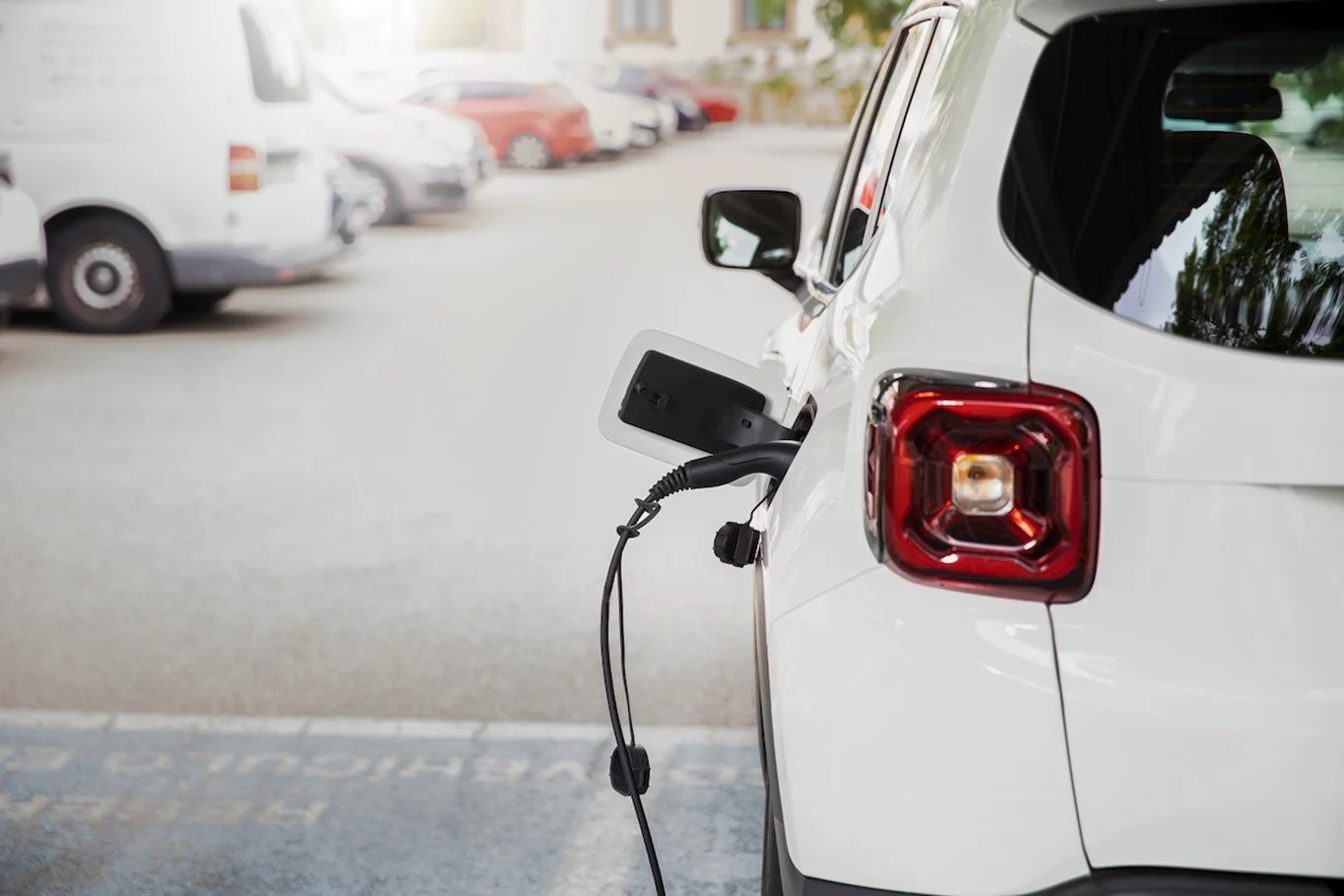
Thankfully, we now have good choices for these replacement purchases, and they are getting better every year. Electric cars currently have good range, are close to cost parity with combustion cars, and save money every mile we drive. Air-source heat pumps for heating, cooling, and hot water now perform four or more times better than traditional appliances. The modern induction cooking experience is better than cooking with gas and is twice as efficient.

Dispersed rooftop solar can be the cheapest energy source, but we make it cost more than it needs to by cumbersome, lengthy permitting and inspection requirements. Whereas the installed cost is around $1 per watt in Australia, it ends up near $3 per watt in the U.S. When the U.S. is fully electrified, 20-30 percent of electricity can be generated locally on rooftops, and the remainder will need to come from wind farms, utility-scale solar farms, geothermal wells, and hydroelectric facilities.

Thinking about addressing climate change can be overwhelming and depressing. Replacing fossil-fuel equipment with electric units will enable us to be and feel part of the solution, without sacrificing the conveniences of modern life. Moreover, the long-term economic benefits are not only in utility bill savings, but in creating jobs. Several studies link 25 million new jobs to mass electrification in the U.S. Many of these will be local.

Once we shift to clean energy, we’ll be able to enjoy all the comforts — warmth, air-conditioning, zippy cars, and hot water — but with lower costs and cleaner air.