
Communities

The Big Picture on Electric Vehicles

Fewer Vehicles and Driving Fewer Miles Needs to Be Our Future

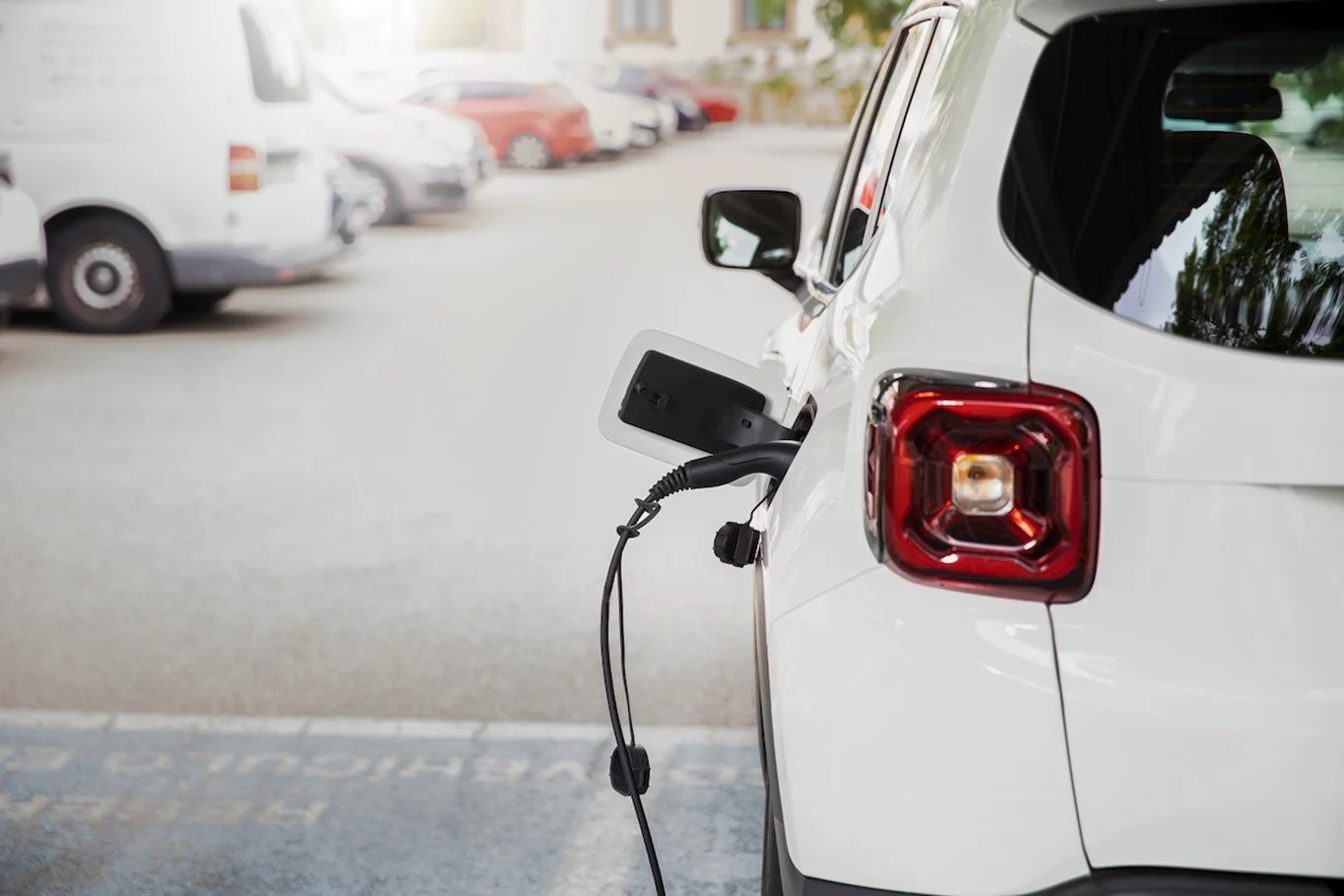
The world is rapidly moving toward electric mobility — bikes, scooters, cars, buses, and trucks. New rules proposed by the Federal Environmental Protection Agency (EPA) for more rigorous tailpipe pollution reduction means that within 10 years, two-thirds of all new cars, half of new commercial vehicles, and up to a third of new 18-wheelers could be electric. California has set new standards that require manufacturers to sell an increasing number of zero-emission freight trucks and buses.

These moves are momentous in tackling the 28 percent of total U.S. climate pollution that comes from transportation. The truck and bus component represents about one-tenth of all U.S. vehicle traffic but accounts for more than half the sector’s air pollution.

A word of caution, however. The fossil-fuel industry, in spite of its public statements supporting clean energy and its massive spending on messaging, sends more lobbyists than any country to every national or international meeting on climate for the purpose of slowing or disrupting progress toward a cleaner energy future. Moreover, it collects $5.2 trillion in subsidies annually (6.5 percent of global GDP) and continues to develop every opportunity to extract more fossil fuel.

Clearly, this pattern of extraction and exploitation must change if the planet is to be saved. Furthermore, cutting back on the amount of energy produced, including renewable energy, will make the transition to 100 percent renewables easier and faster to accomplish. The exception is in the lowest-income countries that need to increase energy use to meet basic human needs. The IPCC (Intergovernmental Panel on Climate Change) indicates that if we want to limit warming to around 1.5 degrees Celsius above pre-industrial levels, then we need to scale down global energy use, mostly in high-income countries. Why in rich countries? Because on average, we consume 28 tons of material stuff per person per year. Focusing on materials has a range of powerful benefits, including taking pressure off ecosystems. It means less deforestation, less habitat destruction, and less biodiversity collapse.

The framework for thinking about electric cars and trucks should include reducing the total number of cars, making them smaller, and reducing miles driven. The best way to achieve this scaling back is to invest in affordable (or even free) public transportation, which is more efficient in terms of materials and energy. Making it as attractive, clean, and convenient as possible is essential.

While sunshine and wind are obviously clean, the infrastructure we need to capture them and the products that use this clean energy are not. Transitioning to them is going to require dramatic increases in extraction of metals and rare-earth minerals with real ecological and social costs. We have deluded ourselves (or been deluded) many times by new technologies or material efficiencies that promise sustainable gains yet lead to more production, consumption, and greenhouse gases. Only by universally applying a net green analysis, which looks at the entire picture and focuses squarely on environmental impact reduction, will we help ourselves and our planet.

Is Rapid and Complete Degradation of Plastics Possible?

Bringing Nature’s Secrets Into Plastic Production May Finally Solve Disposal Dilemma

Plastics are ubiquitous and do not decompose. Every piece of plastic produced since 1907 still exists. A combination of physical, biological, and sunlight exposures can degrade plastic debris, but at most to a micro or nano scale. In essence, plastics pollute land, water, and air, posing environmental and health issues for all living creatures.

Scientists are beginning to realize that this longevity dilemma might be solvable, since many species build strong, long-lasting materials that still break down into simpler compounds that can be reused by other organisms in a healthy, regenerative cycle. Plastics are made of repeating units called monomers, which can be bonded together in long, sturdy chains called polymers. 

Natural organisms also produce complex polymer chains, but they can be broken down when enzymes fit into the bonds between monomers. These enzymes, found in the natural world, catalyze chemical reactions that unlock the bonds and break the chains into their component parts. With plastics, microbes and enzymes are only able to attack the surface, leaving the bonds mostly intact and out of reach of enzymes.

Thinking to help facilitate the degradation of plastics, scientists tried embodying enzymes directly in the production process. The high heat and great pressure of manufacturing, however, damaged the sensitive enzymes before they could work their magic. 

At one company, called Intropic Materials, researchers surmounted this barrier by basically taking another process from the natural world and combining it with plastics. Specifically, they utilized specialized types of molecules that exist inside many organisms called “chaperone proteins” that assist enzymes to “switch on” or move to where they need to be to work effectively. 

Before embedding these proteins in the production process, they found that first they needed to wrap them in a biodegradable cover to protect them when plastic is melted and extruded. Thus undamaged, the enzymes can do their job when the plastic’s useful life has ended. When exposed to composting conditions, i.e., moderate heat and moisture, the enzymes eat the plastic from the inside out within hours or days — not simply breaking it down into microplastics, but disintegrating it back into simpler, reusable molecules as soil or even new plastics.

Efforts to recycle plastics have only been marginally successful. Our attempts to wean ourselves off plastics have been even less successful. But now, by bringing together natural and synthetic materials and processes, Intropic Materials is opening the door to a more innovative and sustainable future.

People Can Make Rain

Reversing Destructive Land-Use Patterns Can Improve Local Water Cycles

Through an examination of tree rings dating back 2,500 years, scientists have determined that from the 1500s until the 1970s, California was uncharacteristically wet. The latter 130 years of this period cover the modern development of the state. Understandably, planning parameters have been based on overly optimistic figures for rainfall. Not only are our expectations outside the long-term range of weather patterns, but we are making the climate hotter and drier through human-induced climate change.

There are two moisture cycles in nature. The most widely understood one is rain flowing down rivers to the sea, where it evaporates from the ocean surface, condensing into clouds that drift over land to rain again. This, however, only accounts for about half of rainfall. The second cycle is a smaller, more local one. Moisture evaporates from plants, trees, and the soil, making clouds overhead and subsequently falling as rain in the region.

To make clouds, microscopic particles are needed. These were thought to be inert minerals like dust. Only within the past 50 years have scientists begun understanding that bacteria can also be nuclei around which water vapor can coalesce. Studies have shown that cloud-making bacteria exist in every part of the world. One study of cloud-water revealed 28,000 different species of bacteria. Plants and algae create conditions for microbe propagation, of which some become lifted by winds and attract water vapor. Bacteria multiply rapidly and are among the most resilient organisms on the planet.

The knowledge that microbes from plants and soil play a central role in rain cycles over land has profound implications. For example, the removal of vegetation by overgrazing or exposing bare soil in monocrop farming can create conditions for drought. Conversely, the restoration of a plant-rich ecosystem could increase precipitation. Cloud-seeding bacteria can be deliberately cultivated to boost water cycles. 

Reversing destructive farming, ranching, and forestry practices creates opportunities to restore carbon stocks in soil, plants, and trees. Healthy, carbon-rich soils store a great deal of water and foster abundant microbial communities, leading to increased evaporation, water vapor, and clouds. Evaporation is usually seen as a loss, something to be minimized. We need to change this perspective and start seeing it as a source of precipitation.

A Dutch company, Water Makers, has a project to transform the upper half of the Sinai desert from brown to green, filled with farms, plants, animals, and forests. Centuries ago, the Sinai was green with life, before degrading activities by people dried it out.

With droughts and wildfires in California ever more frequent, it is time to start transforming our industrial agriculture and landscape into carbon-sequestering soils and plants, thereby improving the local rain cycles.


Coming Soon: Plant-Based Roads

Plant-Derived Material Can Make Our Roads Carbon-Negative

With all the attention focused on shifting from fossil fuels to renewables, there has been less emphasis on the hundreds of other products made from petroleum and finding substitutes for them. Some of the more common commodities are plastics, shoes, lubricants, paints, sports equipment, synthetic fibers for clothing, and building materials, including roofing.

One ubiquitous product is bitumen, a fossil-fuel-derived binder that holds asphalt aggregate together. A company in Norway is recycling old, damaged roads by using a plant-based binder instead of bitumen. Currently, it has applied this process only to repairing roads. Because Norway is far north, its roads suffer from repeated freeze-thaw cycles. The non-petroleum bioasphaltic binder it employs is lignin — a wood-based material essential to creating structure for trees and plants. The company utilizes a machine called the Carbon Crusher to grind up the top layer of damaged roads before applying the lignin to rebind the ground-up aggregate into a new, durable top layer. 

Approximately 18 billion tons of asphalt make up U.S. roads. All these roads need to be maintained. Asphalt is energy- and resource-intensive, contributing substantially to climate change. Lignin, one of the most abundant natural polymers, is an ideal substitute for crude oil bitumen. Because trees capture CO2 as they grow, using lignin on roads sequesters carbon. This significantly shrinks the carbon impact, especially for road repair. When the road aggregate is recycled, as in Norway, the use of new material is avoided and their associated carbon emissions from production and transportation, often making the entire process carbon-negative.

The process of rehabilitating roads with lignin is faster, cheaper, and more durable than what has been the case with standard bitumen repairs. The biggest plus, however, is its environmental benefits. In Norway, they are finding that lignin is more flexible than bitumen, allowing the repaired surfaces to adapt better to the harsh weather, preventing cracks and making the repairs last longer.

Sweden and the Netherlands are also repairing roads with lignin. The process is starting to be applied to building new roads, but with fewer environmental advantages. The ultimate aim, however, is to stop building new roads — which incentivizes more driving — and focus on better care of existing highways.

It is critical that substitute products, processes, and technologies be found for the myriad of common petroleum-based products that dominate our modern life. What is now underway for asphalt is an instructive model.