
Communities

A Farmworker Community Leads in Green Transportation

California Innovating Solutions to Transportation Inequities

Poor communities get overlooked, neglected, and sometimes exploited as dumping grounds. This is true for farmworker communities. One town, Huron, just over 6,000 residents, mostly Hispanic fieldworkers, is changing this pattern. Most of us have probably never hear of this place in California’s Central Valley. It is one of the most fertile places on Earth and produces windfall profits for big agribusiness but not for seasonal workers.

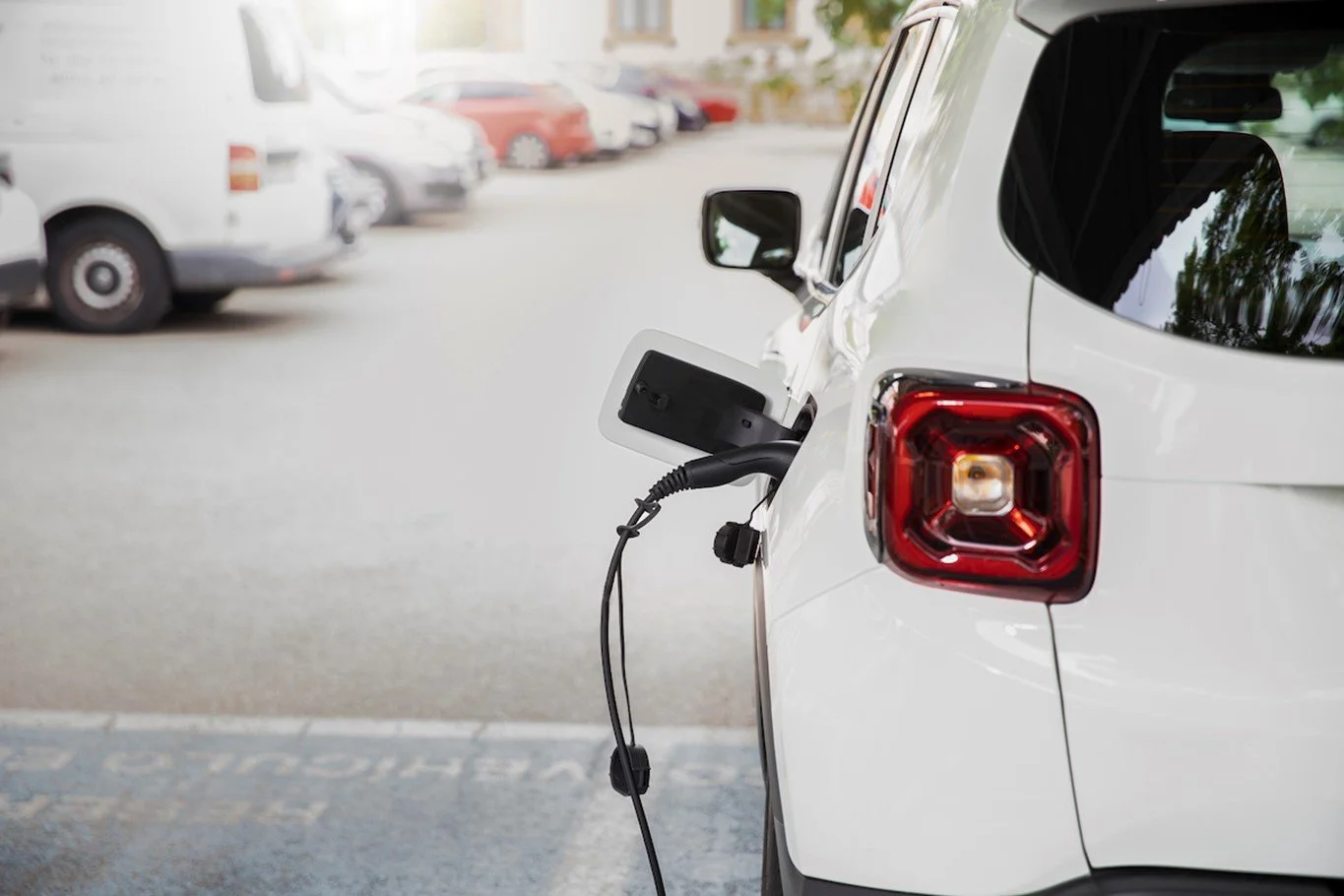
Rey León, the town’s mayor for the past five years and son of a bracero migrant from Mexico, remembers as a boy traveling 53 miles by bus for three hours to visit a cousin in the hospital. Years later, after graduating from UC Berkeley and returning to Huron, he tried to get reliable bus routes for his community but without success. Eventually he was able to obtain an assortment of grants from state climate programs that industrial polluters are required to fund. With this money, he created the Green Raiteros program — a program of nine electric vehicles that shuttle residents all over Fresno County free of charge. The name, Raitero, is from a slang word meaning “ride.” Raitero is a person who offers a ride. People can use this service as often as needed by reserving a ride a few days in advance. 

Affordable and reliable transportation is crucial for poor folks to avail themselves of health-care services. Wives and their children often rely on husbands to get to distant medical appointments, frequently losing a day’s wage in the process. Imagine the impact when the median annual household income in Huron is $25,000.

León’s program, with 30 public charging stations, already has the greatest density of electric ports per capita anywhere in America, even accounting for the wealthiest ZIP codes. There are only a few places nationwide that have tried to integrate electric vehicles into low-income communities, and almost all are in California. According to the UCLA Luskin Center for Innovation, getting green vehicles into marginalized communities is “the greatest challenge we face in meeting our climate goals.” Cities in California are starting to innovate solutions to this problem.

Rancho San Pedro, a polluted neighborhood in Southern California with 450 subsidized apartments, has created a car-sharing program where electric cars are available to enrolled residents for $3 an hour.

Money no longer seems to be an issue since Congress passed the infrastructure package. The Biden administration is committed to addressing deep inequities in the transition to green transportation. It is looking to Huron and similar programs that have reversed the normal top-down model deployed in communities. Local leadership is the best approach to confronting climate change, environmental injustices, and lifting up the most marginalized. Once again California is proving to be an innovator and exporter of outside-the-box policies and ideas.

Save Water and Grow More Food

The factor that has shaped human civilization more than any other is water. The extreme weather patterns due to climate change are increasing drought in some regions and extreme storms and floods in others. In California and the West, we are experiencing more intense drought. Given this shift, irrigation practices are key to achieving optimal water efficiency on farms and in urban landscapes. Drip irrigation has been widely adopted the past few decades. More recently, a new irrigation technology called GrowStream, designed to communicate directly with plants, is starting to be deployed.

This plant-responsive irrigation system is based on an understanding of plant physiology and organic chemistry. The groundbreaking research by Suzanne Simard over the past three decades reveals the complex, interdependent underground mycorrhizal networks of forest trees and how they communicate, learn, and share. Her work is the foundation for this “smart” irrigation system. The genius of this system is subsurface tubing infused with a pore-filled polymer that can sense a plant’s needs. When a plant gets thirsty, it releases a special chemical into the surrounding soil. The microporous tubing is poised to respond to these chemicals with the slow release of water and nutrients through its millions of micropores at a rate to match the roots’ absorption capacity. When the plant’s water craving is quenched, it stops emitting the thirst chemical, and the micropores close.

Since the system is responding “real-time” to the plant’s signals, it can answer to the plant’s reaction to temperature and wind variations. Because the system is in sync with the plant’s requirements, there is less stress on the plant, resulting in more growth and higher yields. The tubing lines can run 1,200 feet, and since the tubing communicates directly with each individual plant, one line can support a variety of plant types. 

The system is easy to install and maintain; costs the same or less than other subsurface irrigation technologies; requires no sensors, valves, controllers, timers, or other electronic devices; and has no emitters to get clogged. A small machine is able to trench, roll out the tubing, and backfill in one pass. Most importantly, the efficient application of water reduces the amount needed by 30-50 percent over drip systems. Similarly, the ultra-low pressure and flow rates dramatically reduce pumping demands, yielding 40-70 percent savings on energy. 

The GrowStream system is being used in 14 countries, some in the Middle East and some in Africa. In the U.S., it is being tested on urban landscaping with the goal of increasing green cover and countering the heat-island effect. All considered, it has the potential to greatly reduce water scarcity and improve food security. The biggest hurdle will be getting farmers to change from existing methods of irrigation that are already established and paid for.

Electrify, Electrify, Electrify

Each Time We Replace an Appliance Is an Opportunity to Reduce Warming Emissions 

Until recently, most of us have not had choices about the power we consume: the gas for our cars or the fuel used to produce our electricity. Most supply-side choices are made by giant corporations. Fortunately, the game is shifting, at least in California and a few other states, where community choice energy programs with more clean energy, often 100 percent, are increasingly available. Santa Barbara, City and County, now have community choice programs. This is changing the supply side of the equation.

On the demand side, however, we have always had more influence: We decide what we drive, how we heat our water, what heats our house, what cooks our food, and what dries our laundry. For the past 50 years, the climate focus related to the machines and appliances we routinely buy has been on efficiency — mandated vehicle fuel standards, tighter houses through more rigorous energy codes, and Energy Star appliance performance ratings. Efficiency policies are not going to get us to zero emissions, however, certainly not fast enough to address the urgency of the climate crisis. Electrifying everything can, however, go a long way toward solving the problem — and rapidly. How fast? As fast as appliances need replacing: cars roughly every 10-20 years, home furnaces about every 20 years, and kitchen and laundry appliances every 10-15 years. 

Thankfully, we now have good choices for these replacement purchases, and they are getting better every year. Electric cars currently have good range, are close to cost parity with combustion cars, and save money every mile we drive. Air-source heat pumps for heating, cooling, and hot water now perform four or more times better than traditional appliances. The modern induction cooking experience is better than cooking with gas and is twice as efficient.

Dispersed rooftop solar can be the cheapest energy source, but we make it cost more than it needs to by cumbersome, lengthy permitting and inspection requirements. Whereas the installed cost is around $1 per watt in Australia, it ends up near $3 per watt in the U.S. When the U.S. is fully electrified, 20-30 percent of electricity can be generated locally on rooftops, and the remainder will need to come from wind farms, utility-scale solar farms, geothermal wells, and hydroelectric facilities.

Thinking about addressing climate change can be overwhelming and depressing. Replacing fossil-fuel equipment with electric units will enable us to be and feel part of the solution, without sacrificing the conveniences of modern life. Moreover, the long-term economic benefits are not only in utility bill savings, but in creating jobs. Several studies link 25 million new jobs to mass electrification in the U.S. Many of these will be local.

Once we shift to clean energy, we’ll be able to enjoy all the comforts — warmth, air-conditioning, zippy cars, and hot water — but with lower costs and cleaner air. 

The Overlooked Heroes of Coral Reefs

Sea Cucumbers Maintain Coral Reef Biodiversity and Counter Ocean Acidification

Coral reefs cover only a small area of ocean floor, mostly along tropical coastlines. Their importance ecologically, however, is disproportionate to their prevalence. They protect coastlines from storms and erosion, serve as nurseries for fish, are critical to ocean biodiversity, generate half of the earth’s oxygen, and absorb nearly a third of manmade carbon dioxide emissions. Tragically, half of all reefs have died in the last 30 years. Scientists are saying that warming waters, increasing ocean acidity, pollution, and overfishing threaten the remaining reefs in the next 20 years. 

Coral reef restoration is expensive, according to NOAA (National Oceanic and Atmospheric Administration), costing about $1 million per acre. The main restorative approach is nurturing scraps of coral until they are large enough to replant on reefs. Through genetic research, scientists are hopeful of finding or developing more heat-tolerant species. Perhaps the most effective and least costly option is to encourage nature’s process by promoting healthy populations of sea cucumbers. These scavengers of the sea floor are garbage collectors and nutrient recyclers. It turns out that these slimy, faceless creatures play a critical role in maintaining coral reef health and biochemical balance.

Sea cucumbers’ digestive systems transform their diet of sand and bio detritus into nitrogen-rich, aerated sediment on which coral and algae rely. Not only do these vacuum cleaners of the ocean floor maintain healthy oxygen and nitrogen levels in the sediment, but their excrement also buffers reefs against acidification, a problem linked to ocean warming. Calcium carbonate, the building block of coral skeletons, is becoming increasingly scarce because of increasing acidity. The ammonia in sea cucumber waste increases the availability of calcium carbonate in the reef environment.

Scientists have struggled to assess how significant sea cucumber excrement is. Recently, an Australian research team, using drone surveys, satellite imagery, and direct observation, has gained a more accurate understanding of how beneficial it is. They estimate that there are three million sea cucumbers on the Heron Island Reef, the target zone of their study, and determined that each creature produces almost one and a half ounces of waste each 24 hours. Of course, this can vary widely between specific creatures, as they have been found to be from a few inches to six feet in length. An average of one and a half ounces aggregates to the weight of five Eiffel Towers of excrement each year on their research reef.

Because sea cucumbers are eaten as a dried delicacy in many Asian countries and considered to have medicinal properties in China, their populations are being heavily harvested and are declining at an alarming rate. Over 70 countries currently harvest these creatures. Drone surveillance techniques like those used by the Australian researchers could be employed to monitor sea cucumber numbers. Last year, the first sea cucumber conservation reserve was set up off an Indian island. Hopefully, this is just the first of many.